

Waste Management


Goals and Performance Highlights
Goals

- Reduce total waste by more than 0.5% compared with the previous year.
- Reduce waste per total patient days by more than 0.5% compared with the previous year.

- Reduce waste per total revenue by more than 0.5% compared with the previous year.
- Reduce total waste by by more than 2% by 2028, compared with the 2022 baseline year.

- Reduce waste per total patient days by more than 2% by 2028, compared with the 2022 baseline year.
- Reduce waste per total revenue by more than 2% by 2028, compared with the 2022 baseline year.
Performance in 2025

The total waste volume increased by
Waste intensity per total patient day increased by
Waste intensity per total revenue increased by

The total waste volume increased by
Waste intensity per total patient day increased by
Waste intensity per total revenue increased by

Challenges and Opportunities
The management of hazardous waste and non-hazardous waste is a key challenge in mitigating climate change impacts.
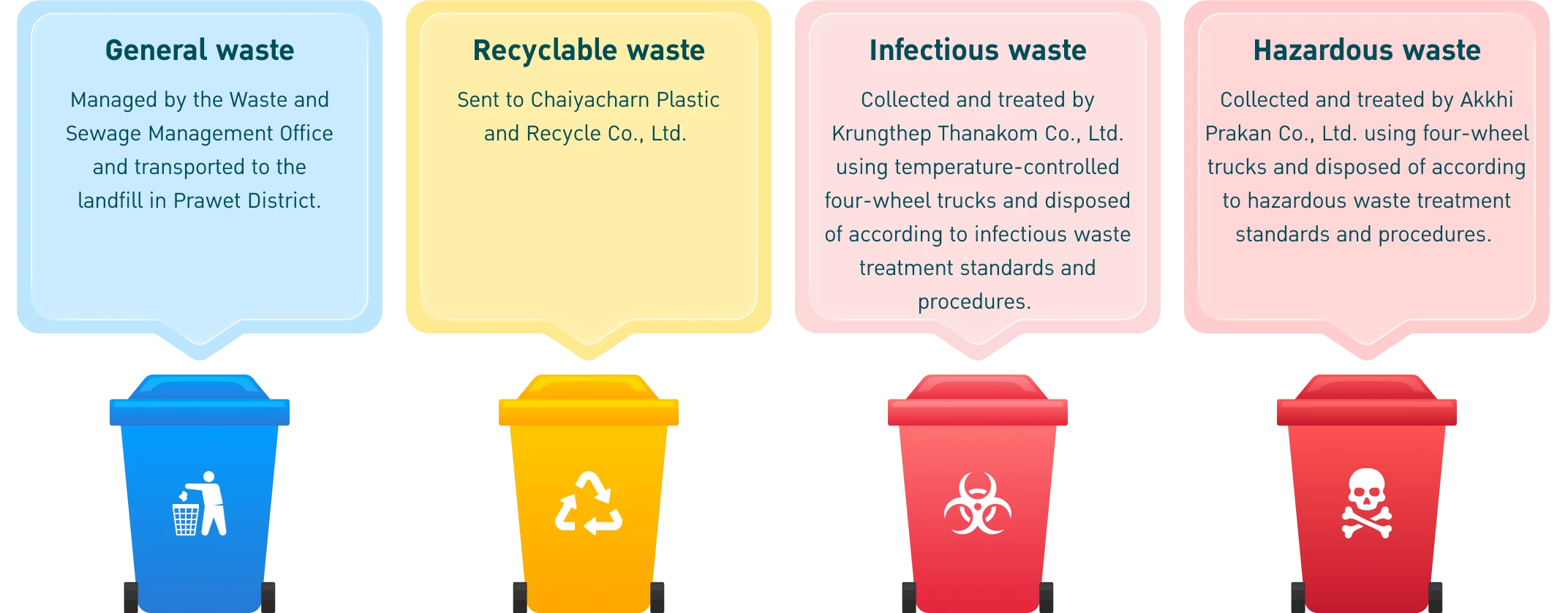
These types of waste may serve as breeding grounds for pathogens, generate unpleasant odors, and disrupt ecological balance. If disposed of in landfills without proper management, they may also generate methane gas, a significant contributor to global warming. To address these issues, the Company has implemented a systematic waste management policy that covers the entire business value chain. The approach focuses on waste reduction, waste segregation, and proper disposal in order to minimize greenhouse gas emissions and reduce environmental impacts.
This approach is aligned with the United Nations Sustainable Development Goals (SDGs), Goal 12: Responsible Consumption and Production, which emphasizes efficient resource utilization, waste reduction, and the promotion of sustainable development practices. The Company is currently reviewing the declaration of a target to achieve Zero Waste to Landfill by 2032, through increasing recycling rates, promoting reuse, and converting waste into energy. These measures represent key approaches to reducing environmental impacts and supporting the Company’s transition toward a Circular Economy.
Management Approach and Value Creation
The Company places importance on systematic waste management alongside the assessment of risks related to potential impacts on business operations. The 1A3R principles (Avoid, Reduce, Reuse, Recycle) are applied in operational processes to minimize waste generation at the source and reduce environmental impacts. The Company applies the 1A3R principles (Avoid, Reduce, Reuse, Recycle) in its operations to reduce waste generation at the source and minimize environmental impacts:
- Avoid: Avoid the use of materials that generate waste.
- Reduce: Reduce the use of single-use materials.
- Reuse: Reuse resources where possible.
- Recycle: Segregate waste to enable it to be processed and converted into usable products again.

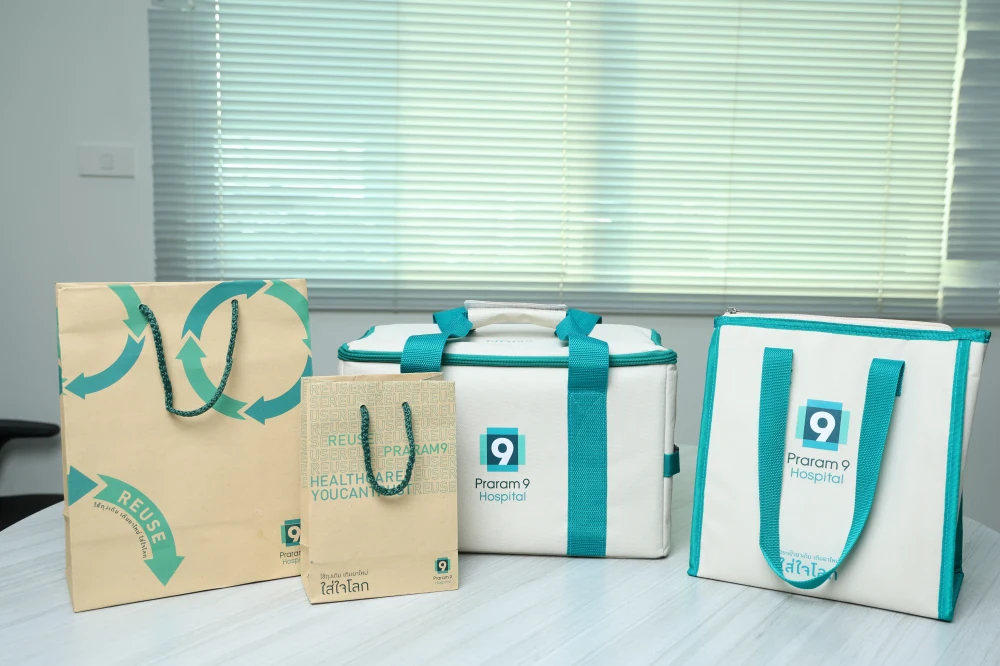
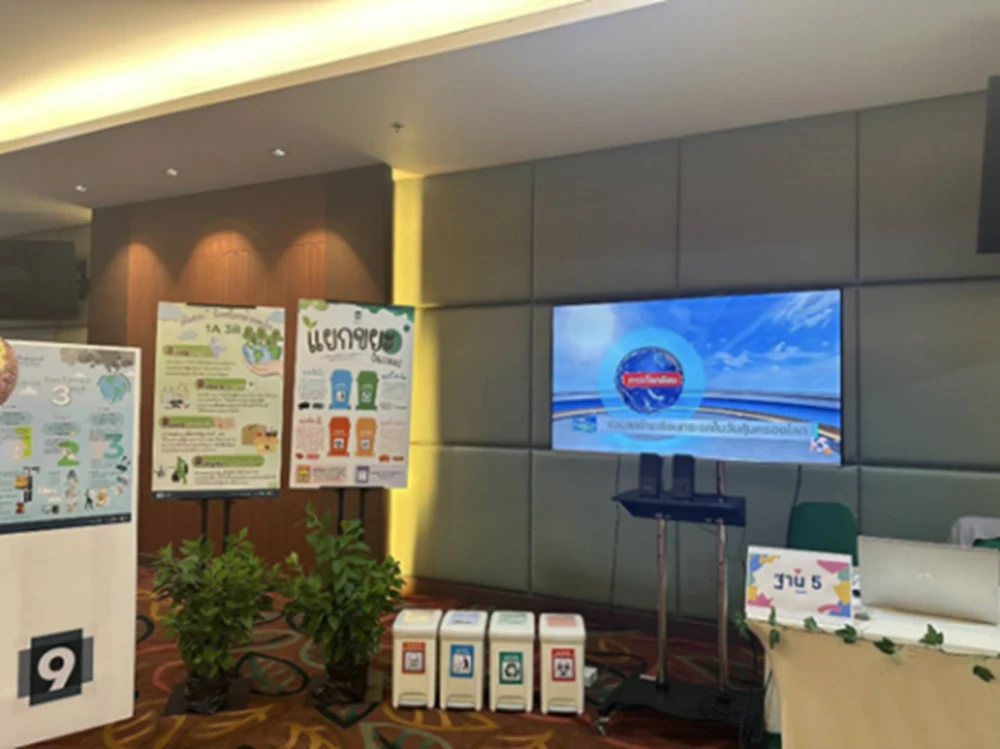
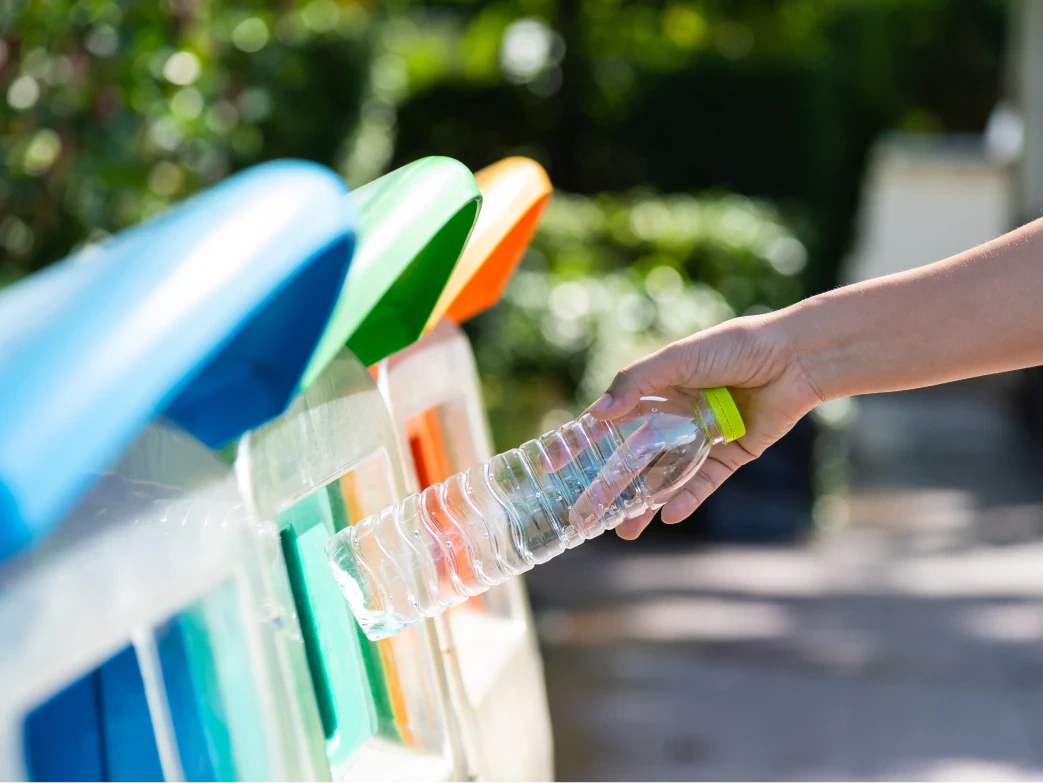
The Company promotes proper waste segregation at the source and places emphasis on avoiding materials that generate waste (Avoid) and reducing single-use materials (Reduce), particularly foam and plastics. Campaigns are conducted to encourage personnel to use personal lunch boxes, water bottles, or cups, and to promote the use of cloth bags or reusable bags. In addition, the Company supports resource reuse (Reuse), such as double-sided paper usage, in order to reduce resource consumption and decrease the volume of waste generated within the organization. Waste is also managed appropriately according to its type, including hazardous waste. This operational approach helps reduce the volume of waste sent to landfills, minimize hazardous waste, and lower greenhouse gas emissions. It also reinforces the Company’s commitment to conducting business in parallel with environmental responsibility and sustainable development.
Performance

Net Waste Volume by Waste Type 2022-2025
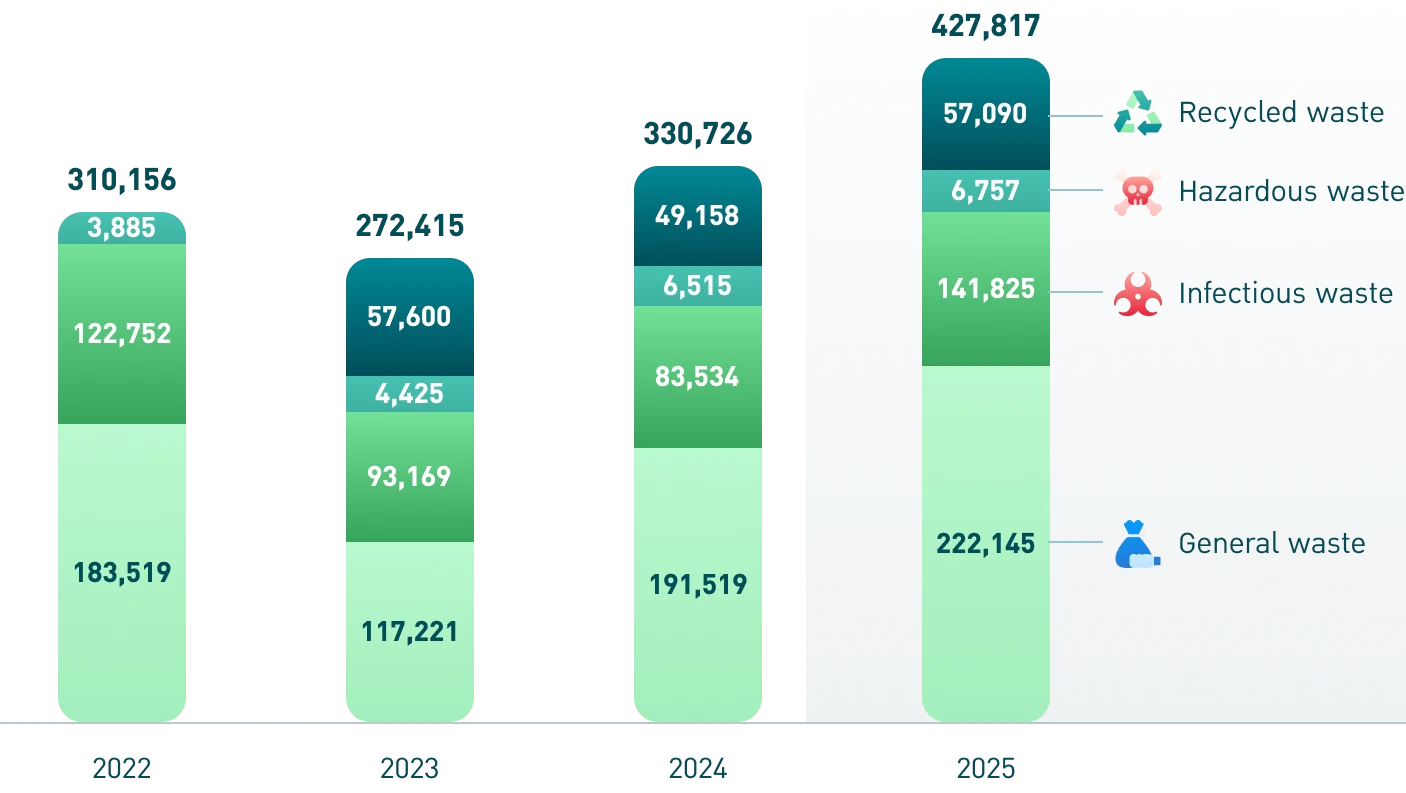


Waste Volume by Type 2022-2025
Unit : Kilogram
| Item | 2022 | 2023 | 2024 | 2025 |
|---|---|---|---|---|
| Net waste volume | 310,156 | 272,415 | 330,726 | 427,969 |
| Waste sent to landfill | ||||
| General waste | 183,519 | 117,221 | 191,519 | 222,145 |
| Infectious waste | 0 | 0 | 0 | 0 |
| Hazardous waste | 0 | 0 | 0 | 0 |
| Recycled waste | 0 | 0 | 0 | 0 |
| Net waste sent to landfill | 183,519 | 117,221 | 191,519 | 222,145 |
| Waste not sent to landfill | ||||
| General waste | 0 | 0 | 0 | 0 |
| Infectious waste | 122,752 | 93,169 | 83,534 | 141,825 |
| Hazardous waste | 3,885 | 4,425 | 6,515 | 6,757 |
| Recycled waste | 0 | 57,600 | 49,158 | 57,242 |
| Net waste not sent to landfill | 126,637 | 155,194 | 139,207 | 205,824 |
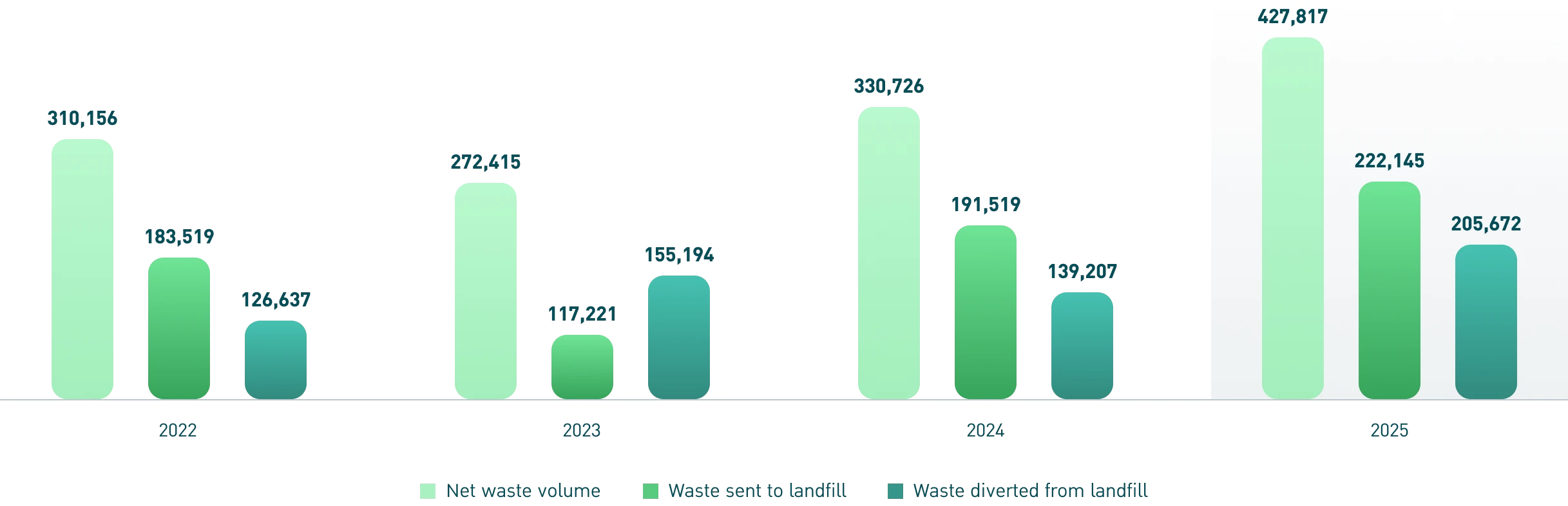
The net waste volume increased by 37.9 percent compared with the base year, in line with business expansion and the growing number of patients. In particular, infectious waste increased in accordance with the higher number of inpatient (IPD) cases. Nevertheless, the Company was able to increase recycled waste to 57,242 kilograms in 2025, driven by several waste management initiatives that have helped reduce environmental impacts in a tangible manner.

Net Waste Sent to Landfill and Diverted from Landfill

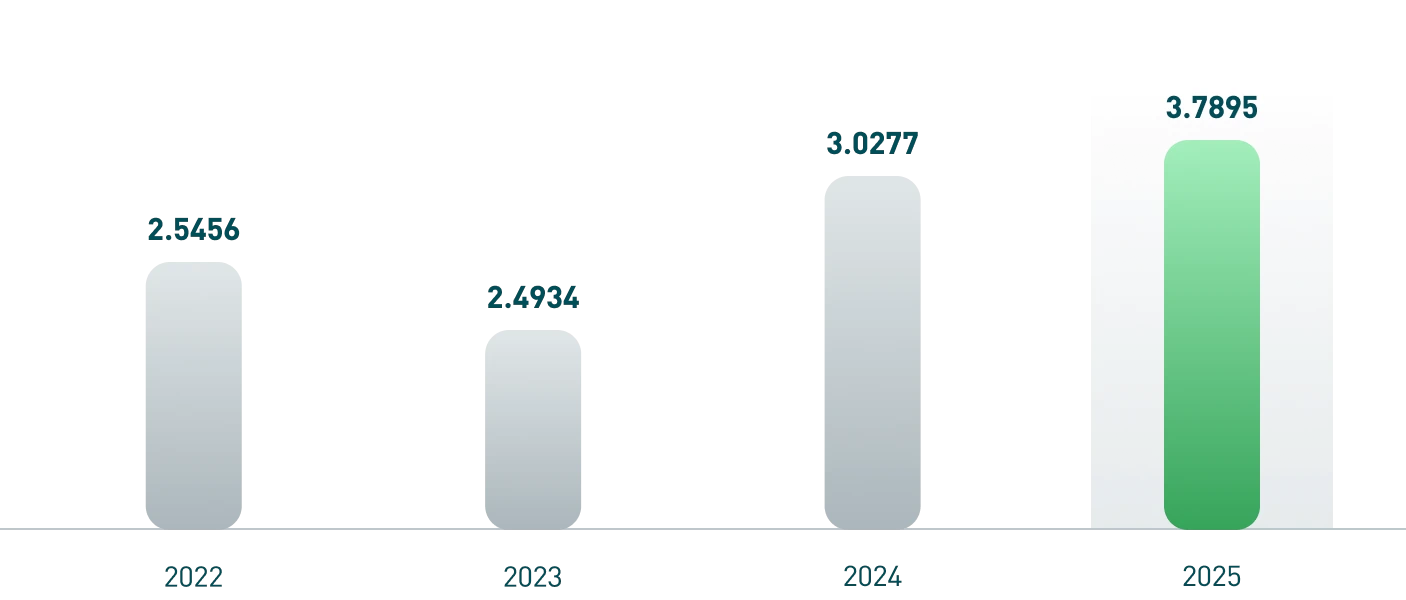
Waste Intensity per Total Patient Day

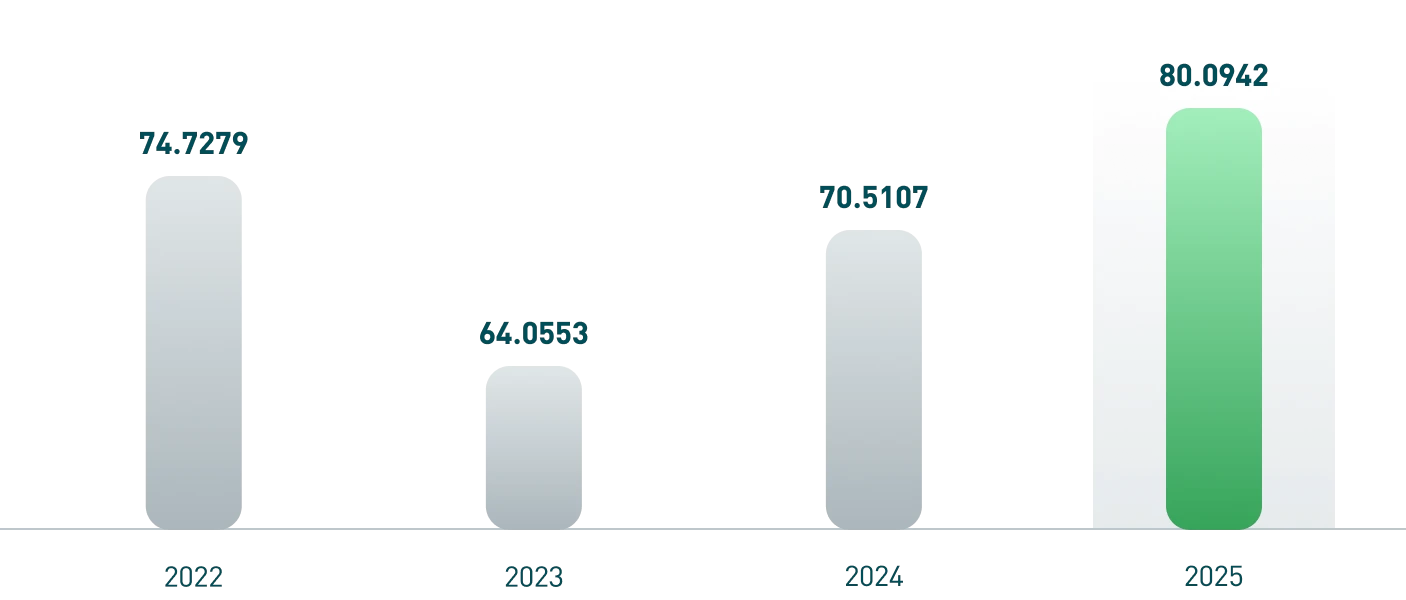
Waste Intensity per Total Revenue

- The total waste volume increased by 29.4%
- Waste intensity per total patient day increased by 25.2%
- Waste intensity per total revenue increased by 13.6%

- The total waste volume increased by 37.9%
- Waste intensity per total patient day increased by 48.9%
- Waste intensity per total revenue increased by 7.2%
The Company implements systematic waste management to reduce negative environmental impacts, reduce waste generation and greenhouse gas emissions, while promoting sustainable business operations alongside social and environmental responsibility.
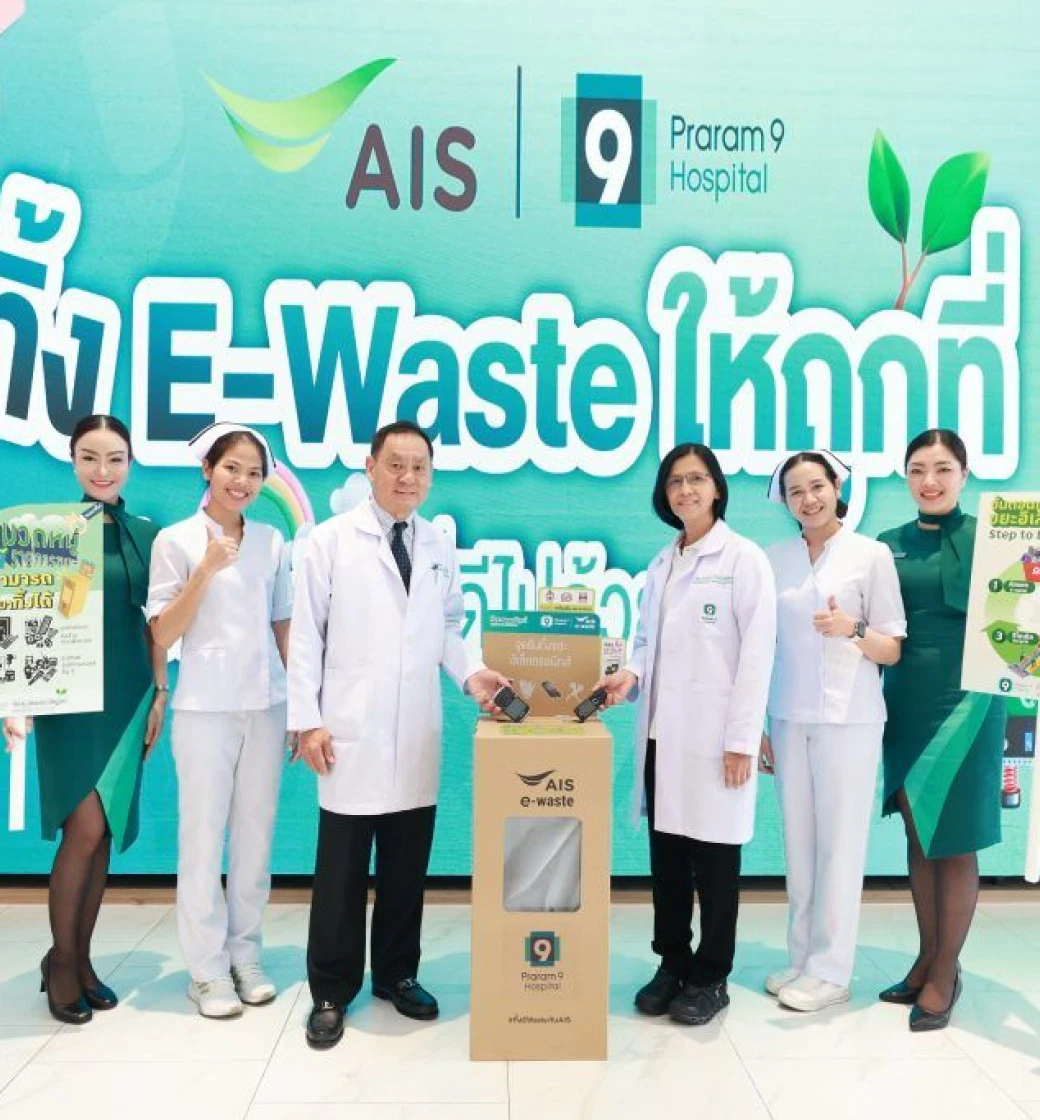
Waste Development and Management Approaches
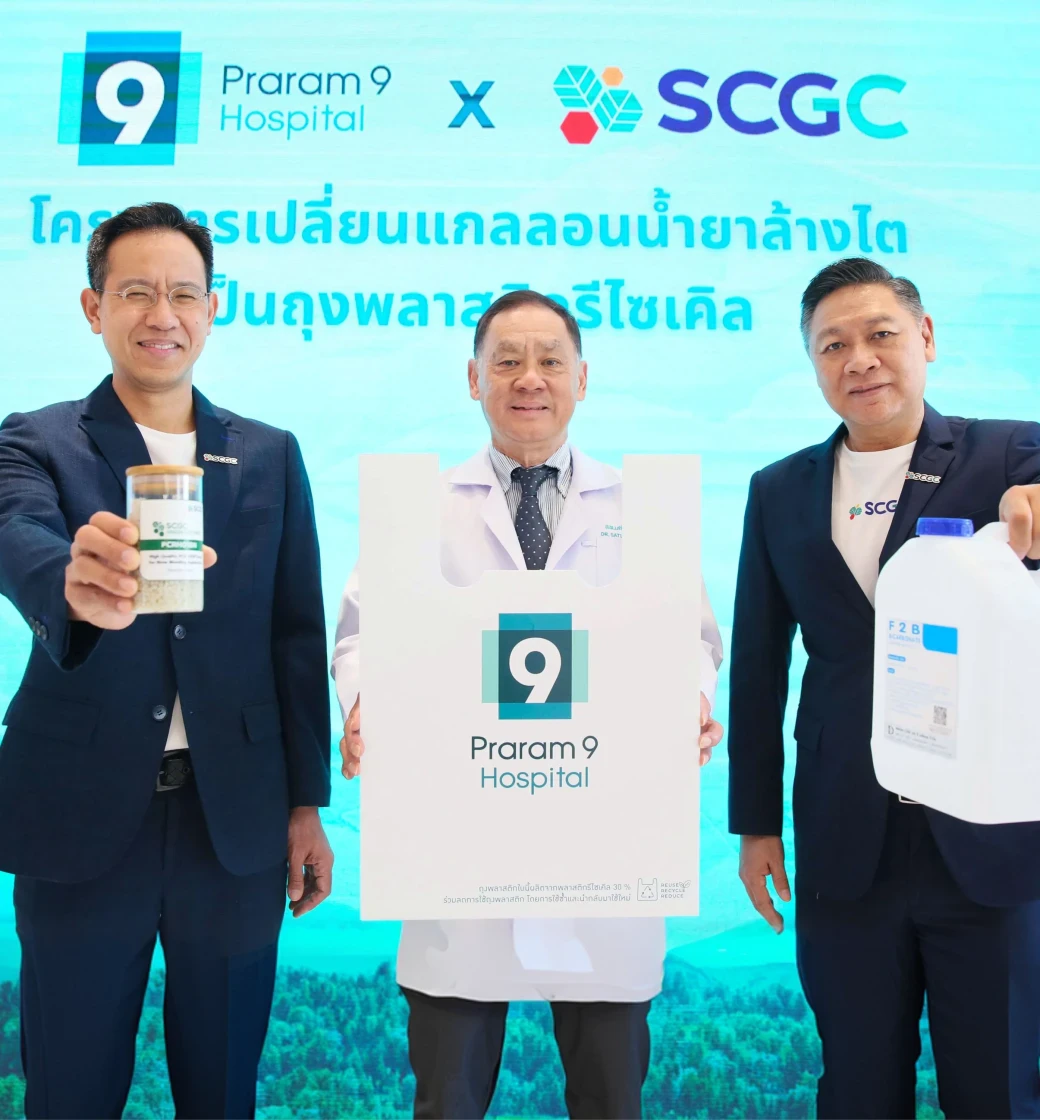
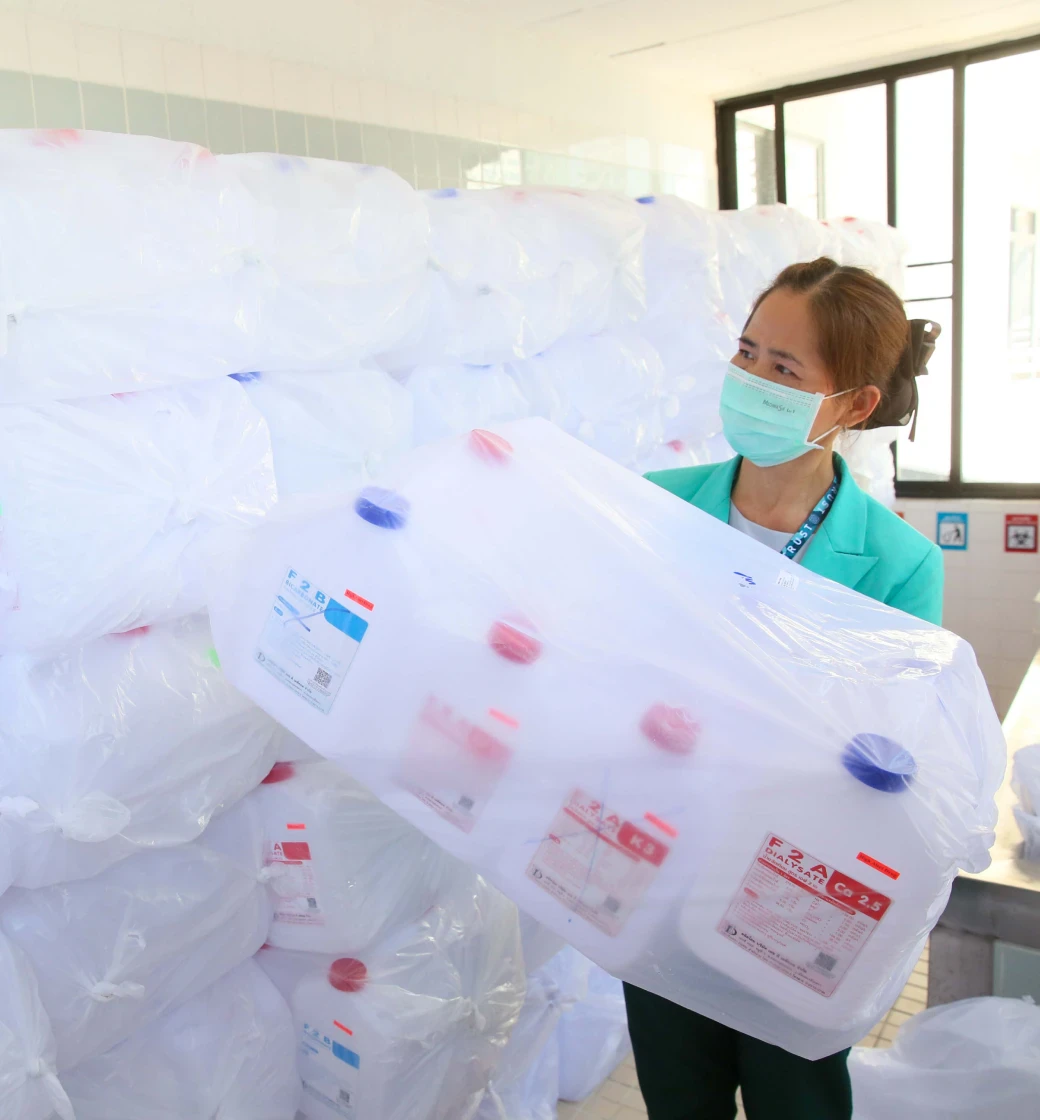
The Company has established a waste management strategy as an important mechanism to enhance operational efficiency and support sustainable development under the ESG framework. The Company aims to achieve “Zero Waste to Landfill” while increasing the value of waste in line with the Circular Economy concept under the 1A3R framework (Avoid, Reduce, Reuse, Recycle).
Stakeholders Directly Impacted

Employees

Customers

Suppliers