

Anti-Corruption


Goals and Performance Highlights
Goals


Performance in 2025



Challenges and Opportunities
The Company operates in an industry that directly impacts human life and safety.
Maintaining high operational standards therefore requires the utmost trust and confidence from patients and all stakeholders. Accordingly, anti-corruption is regarded as a non-negotiable foundation and a core element of Business Ethics in organizational management. This is particularly critical in decisions related to patient health. All actions must therefore be conducted with transparency and be free from conflicts of interest under all circumstances.
Management Approach and Value Creation
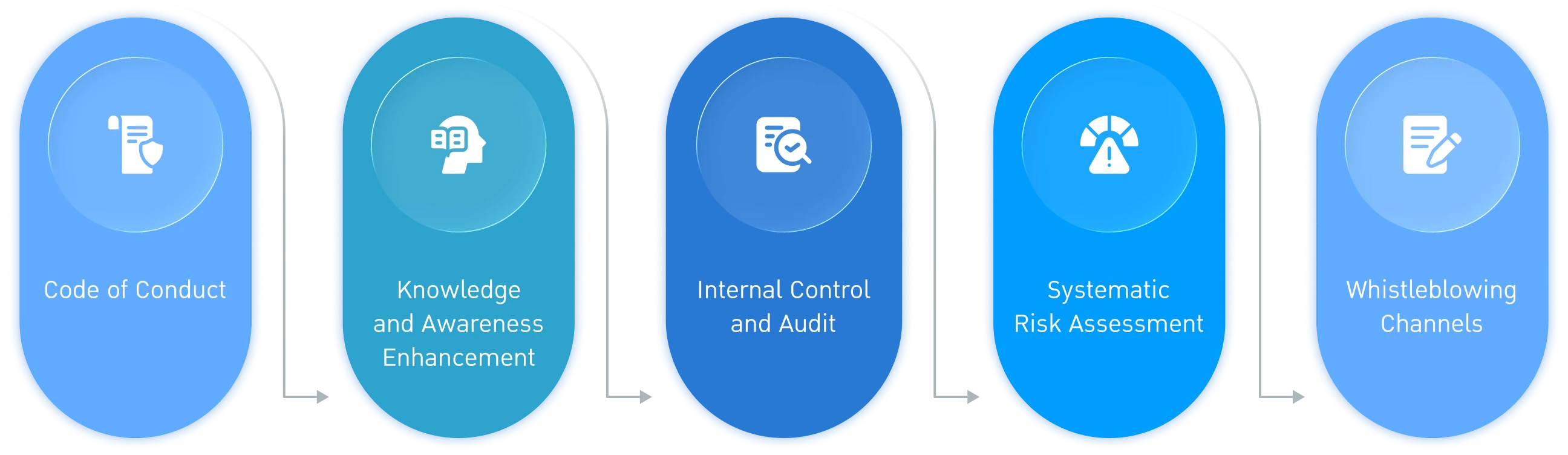

Code of Conduct
The Board of Directors has approved the Anti-Corruption Policy, which strictly prohibits directors, executives, and employees from engaging in any form of corruption, whether directly or indirectly. This includes offering or accepting bribes, engaging in conduct that violates applicable laws or professional standards, or undertaking any action that breaches the Anti-Corruption Policy or Business Ethics. The Company publicly discloses this policy on its website and communicates it to all business partners, requiring their acknowledgment and compliance.

Knowledge and Awareness Enhancement
The Company places strong emphasis on raising awareness by providing ongoing training for directors, executives, and employees on the Anti-Corruption Policy through various formats, including hybrid classroom learning and e-learning programs. In 2025, 100% of directors, executives, and employees participated in the training programs.

Internal Control and Audit
The Company maintains a robust and effective internal control system in accordance with the latest Global Internal Audit Standards, which became effective on January 9, 2025. Particular emphasis is placed on high-risk processes, such as the procurement of pharmaceuticals, medical supplies, and medical equipment, to prevent resource leakage and corruption. In addition, management is required to report a summary of whistleblowing cases relating to violations of Business Ethics and corruption to the Audit Committee on a quarterly basis, prior to reporting to the Board of Directors accordingly.

Systematic Risk Assessment
The Company conducts an annual corruption risk assessment on a regular basis, covering all high-risk core business processes. The assessment results lead to the enhancement of internal control measures and the development of mitigation plans to address identified risks.

Whistleblowing Channels
The Company provides secure and confidential whistleblowing and complaint channels, together with full protection for whistleblowers against retaliation or intimidation arising from reports made in good faith. This serves as a key mechanism for Good Corporate Governance and helps strengthen confidence in the integrity of internal processes.
Whistleblowing ChannelStakeholders Directly Impacted

Employees

Shareholders and Investors

Customers

Suppliers