


Responsibility to Customers


Goals and Performance Highlights
Goals


Performance in 2025



Challenges and Opportunities
Medical service provision directly involves the life, health, and safety of patients, requiring accurate, precise, and timely standards of care.
Rising patient expectations in terms of quality of care, safety, communication, and service experience represent key challenges for the private hospital sector. At the same time, continuous service quality improvement, the adoption of technology, and a patient-centered approach present opportunities to build trust, satisfaction, and long-term engagement.
Management Approach and Value Creation
Quality of Care and Patient Safety
The Company has been accredited by Joint Commission International (JCI) since 2010 and continues to maintain this international standard to the present day. The Company implements a systematic risk management framework and establishes hospital level performance indicators, with strict verification processes in accordance with the 10R principles and rigorous surgical safety procedures. As a healthcare provider with over 33 years of medical service experience, patient safety and quality of care have always been the Company's top priorities. This commitment begins with the careful selection of highly qualified medical specialists and the continuous adoption of advanced medical technologies to ensure the delivery of healthcare services at the highest standards. With its long standing JCI accreditation, the Company remains dedicated to providing medical services and treatments that meet international standards while offering the most appropriate treatment options to maximize patient satisfaction. Through professional medical expertise and high-quality service, the Company also strengthens patient trust and enhances risk management related to patient information and care delivery.
In Terms of Patient Quality and Safety
The Company places strong emphasis on patient safety and quality of care in accordance with international healthcare standards. Operational practices focus on the continuous improvement of patient safety to ensure that patients receive safe and effective treatment. Patient safety is one of the Company's core principles and includes various practices designed to ensure that patients receive appropriate and reliable medical care. In addition, service quality in hospital care is regarded as a key priority to ensure that patients receive the best possible care. Continuous improvement and development across different areas help enhance patient satisfaction and build confidence in the services provided. The key aspects of service quality and patient safety are as follows:
Clinical Competence

Accessibility

Patient-Centered Care

Effective Communication

Safety Standards

Resource Management

Continuous Monitoring and Improvement

Patient Satisfaction
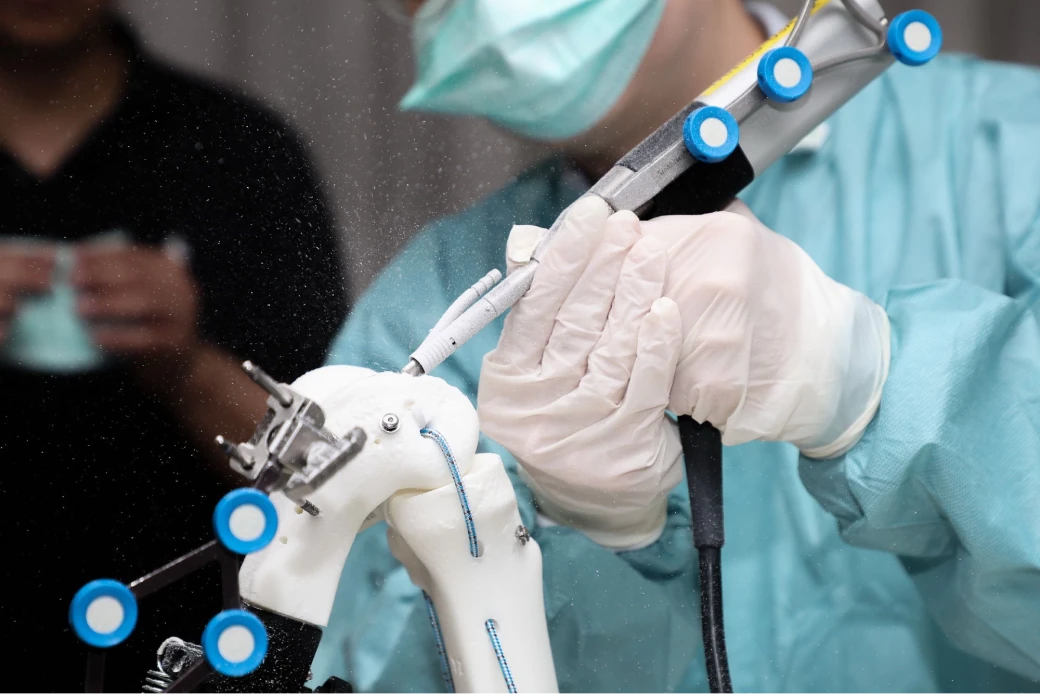
Technology and Innovation
The development of hospital service quality requires an integrated approach that combines high-quality medical services, patient satisfaction, and adherence to international standards to ensure that patients receive the best possible care in all aspects.
E-commerce Market Adaptation and Digital Media Efficiency Enhancement
The company recognizes the importance of responding to changing consumer behavior and has adjusted its operational strategies to enhance competitiveness and create convenient, fast access to healthcare services.
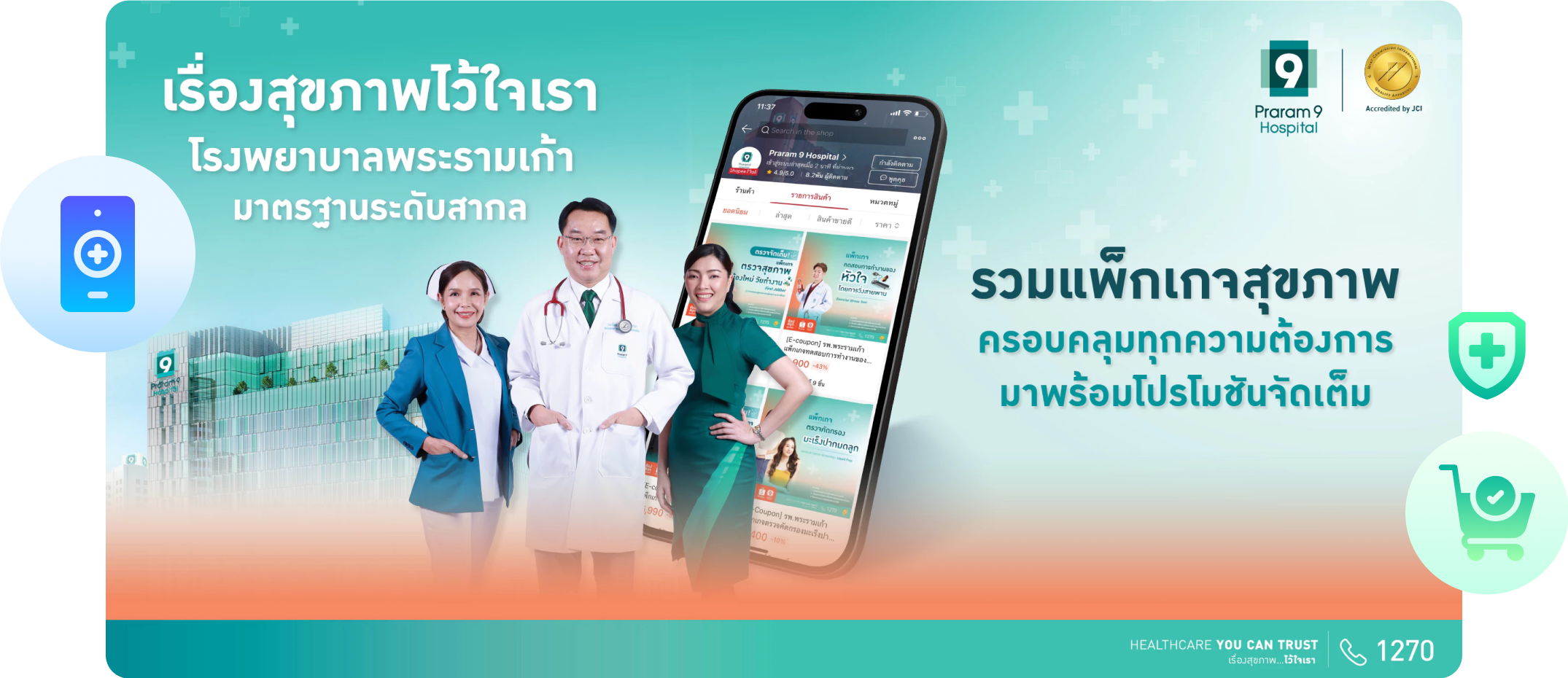
This involves applying digital technology to create added economic and social value. One key strategy is expanding distribution channels through e-commerce platforms, which are highly popular today. The company has partnered with leading platforms, Shopee and Lazada, to open the official 'Praram 9 Hospital' store, allowing service recipients easier access to health programs and services, reducing travel and waiting times, and meeting the needs of a dynamic lifestyle. This initiative not only increases access to professional healthcare services at all times through expert consultations and health news updates but also elevates comprehensive digital healthcare services, encouraging consumers to pay more attention to their health and fostering a better quality of life in the long term. Furthermore, it expands the business into a broader e-commerce market, supporting the sustainable growth of digital healthcare in the future.
Advancing Toward an AI Driven Hospital Through the 9 SMART Innovation
The Company is advancing toward a fully digital transformation to enhance competitiveness and strengthen safety standards, while promoting equitable access to healthcare services. This transformation is driven by the 9 SMART innovation framework, which serves as a key approach to organizational development. Key initiatives include:
Development of a Smart Hospital project based on the “9 SMART”
Delivered through the LINE application to enable seamless healthcare services. The platform emphasizes appointment scheduling, queue tracking, access to medical results, package purchases, and personalized healthcare management, ensuring convenience, speed, and accuracy.

Key features of the Smart Hospital (9 SMART):

The 9 SMART platform includes five key functions:
1. Smart Appointment
2. Online Queue Management
3. Access to Health Information
4. Health Package Management
5. Membership Program
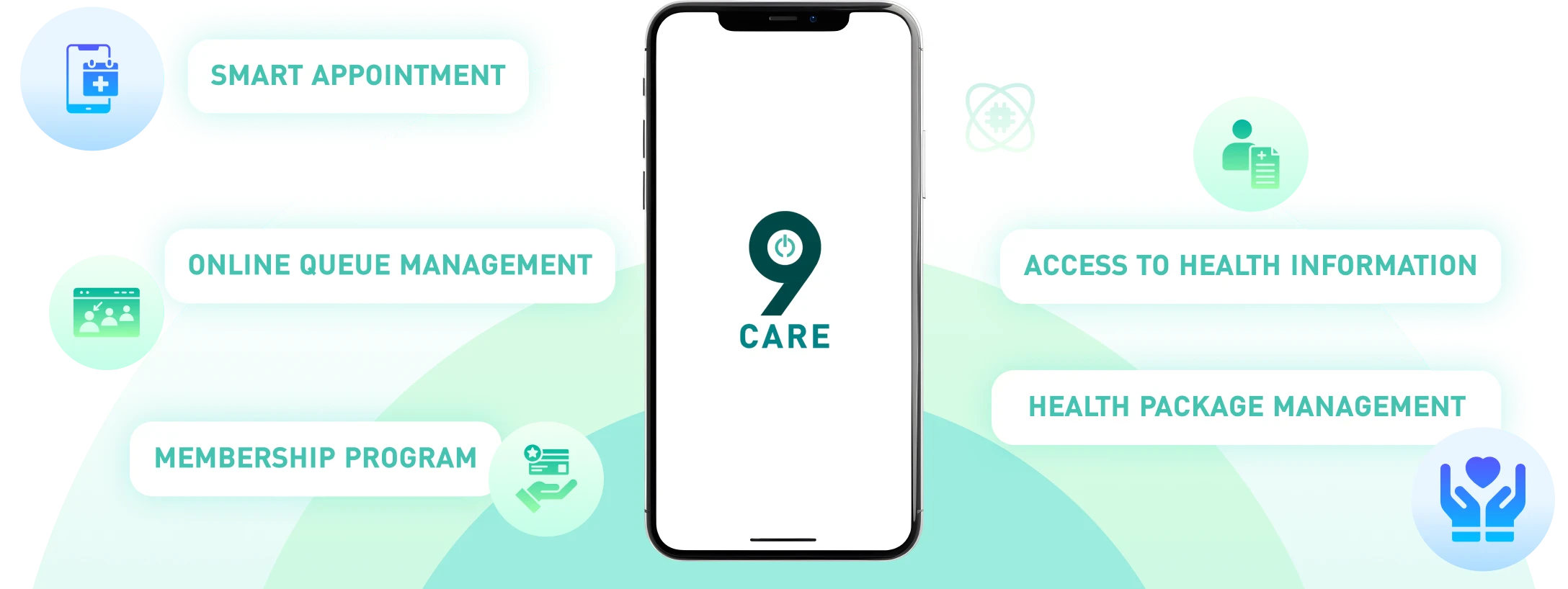
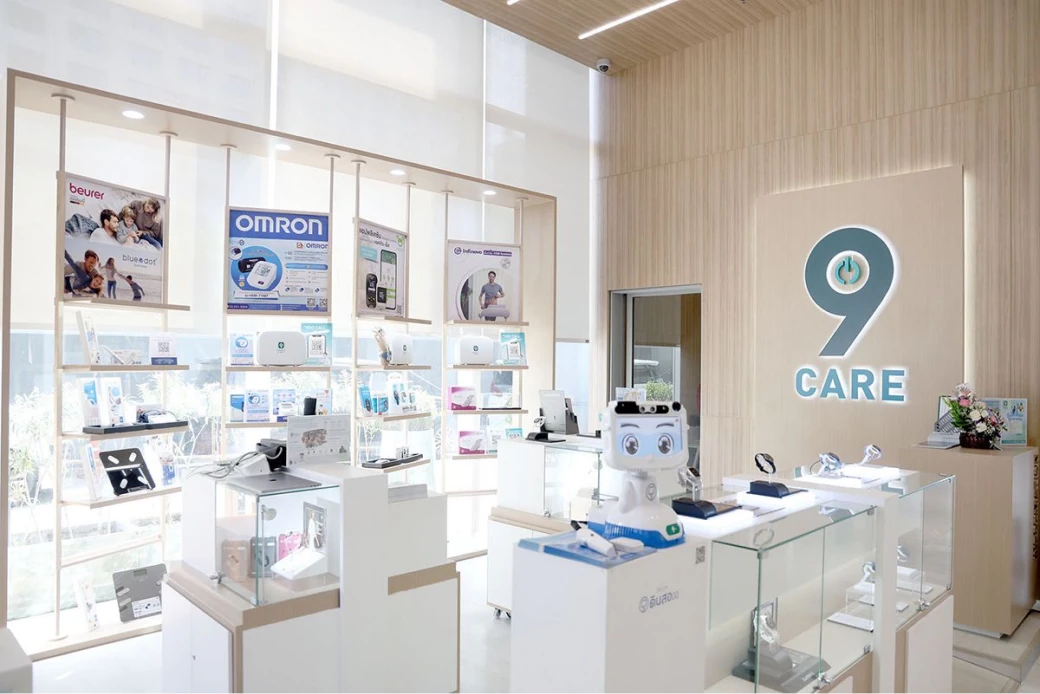
9CARE Application
The application helps reduce service steps and waiting time, while building confidence at every service touchpoint, from eligibility verification to real time access to health examination results. Users can access services within approximately 10 minutes, compared with 30 minutes under the traditional service model. Currently, the application has 5,721 users, with a target of 15,000 users by 2026. The platform is also designed to support an aging society, with 31 percent of users aged 51 and above, reflecting its accessibility and convenience for people of all age groups.

SMART Technology and Telemedicine
The Company has expanded healthcare services beyond the hospital to patients’ homes through telehealth services, enabling patients to receive consultations from professional healthcare teams conveniently and efficiently. In 2025, the number of telemedicine users reached 2,315 representing an increase of 22.2 percent compared with 2024. In 2025, the Company also reviewed and enhanced the quality of its telemedicine services across multiple aspects, including medical standards, user experience, and digital technology connectivity, to ensure greater system stability and data security.
CRM Customer Relationship Management (CRM) system

Electronic Medical Record (EMR) system
The Company is committed to enhancing the quality of medical care and patient experience by adopting a patient centric approach through the implementation of the Digital Hospital concept. This approach integrates medical technology, digital innovation, and professional expertise to deliver healthcare services that are safe, accessible, and highly secure in terms of data protection.
Responding to Customer Needs

The Company places strong importance on customer satisfaction and customer experience, recognizing that satisfaction is a key factor in continuously improving service quality. The Company has established a Customer Feedback Management system to promptly capture and respond to feedback from customers. Surveys, follow ups, and inquiries are conducted regularly with both customers who have received services and individuals who contact the hospital through various online channels. Insights gathered from these channels are used to improve services and better respond to customer needs.
Personal Data Protection and Cybersecurity (Data Privacy & Cybersecurity)
Strictly adhere to the Personal Data Protection Act B.E. 2562 (2019) and ETDA guidelines, with data leakage prevention measures such as:

Least Privilege Data Access

Encryption of critical data

Training all employees on PDPA and ethics in patient confidentiality
Currently, the ISO 27001:2022 standard framework is used for Information Security Management Systems.
Stakeholder Engagement
The company promotes engagement by providing diverse, accessible, and continuous channels for feedback from service recipients and other stakeholders.

Communication and Consultation
Website, QR Code, Facebook, Line Official (@Praram9hospital), Twitter, Call Center phone 1270, Email.

Needs and Satisfaction Surveys
Both paper and electronic questionnaires, interviews by the Patient Experience team throughout the year.

Health Education Activities
Organize training, seminars, and disseminate health information through various media, both inside and outside the hospital.

Listening to Suggestions and Complaints
Through a Risk Management Program linked to all departments, with feedback provided to complainants to build confidence in the resolution process.
Strategy and Future Targets
To enhance responsibility toward customers in line with international standards and stakeholder expectations, the Company has established a three-year strategy (2026–2028) as follows:

Enhance patient safety and quality of care to a leading national level by maintaining JCI accreditation standards.

Increase the proportion of satisfied customers and customer recommendations by setting Net Promoter Score (NPS) targets of more than 80% for OPD and more than 90% for IPD by 2027.

Strengthen a culture of safety and privacy protection through annual training for all employees and enhanced internal audits on data privacy.

Expand digital healthcare services for easier and faster access, including enhancing functions on the Smart Hospital / 9CARE platform to provide integrated services and developing AI systems to support medical decision-making.
Stakeholders Directly Impacted

Employees

Customers