

Innovation Development


Goals and Performance Highlights
Goals


Performance in 2025



Challenges and Opportunities
The Company is committed to becoming a modern and most trusted healthcare hub, recognizing the importance of Balanced and Sustainable Development through the continuous integration of advanced technologies with the capabilities and expertise of its medical professionals.
Innovation serves as a key mechanism in achieving sustainability, particularly in the healthcare industry, where innovation is not merely an option but a critical enabler for improving patients’ quality of life, reducing inequality in access to healthcare services, and strengthening long-term competitive advantage. The Company therefore dedicates significant resources and expertise to drive its vision of becoming an “Artificial Intelligence–Driven Hospital” (AI-Driven Hospital) by integrating digital technologies and Artificial Intelligence (AI) across all aspects of its operations. This transformation is implemented under a robust data governance framework with strong consideration for ethics, enabling professional healthcare personnel to provide the most appropriate and cost-effective treatment options for patients with the highest level of accuracy and efficiency. The Company’s innovation initiatives are aligned with the United Nations Sustainable Development Goals (SDGs), particularly SDG 3: Good Health and Well-Being and SDG 9: Industry, Innovation and Infrastructure.
Management Approach and Value Creation
The Company has established Technology Governance and Data Privacy practices to ensure that the adoption of technology is secure and responsibly managed. Strict oversight measures are implemented in relation to Data Privacy and Ethics, integrating three key dimensions: People, Process, and Technology. Over the past year, the Company has continuously advanced digital innovations with the objective of enhancing Access to Healthcare, reducing inequality, and improving patients’ quality of life. These efforts are guided by the concept of “bringing the hospital to the home” (Decentralized Healthcare). Key initiatives undertaken by the Company include the following:
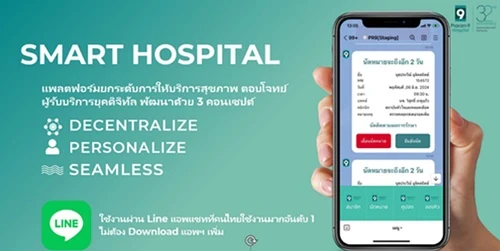
Smart Hospital (9SMART Platform)
The Company has established a strong foundation for service enhancement by redesigning its service processes (Service Design) to better align with the needs of customers, while also developing robust Digital Infrastructure to support future digital services. These initiatives aim to transform the hospital into a Digital Hospital through the full implementation of Digital Transformation. As part of this transformation, the Company has strengthened three key organizational components as follows:
1. People
- Skills Development: Enhancing Digital Skills among personnel at all levels to ensure readiness for digital transformation.
- Organizational Culture: Fostering the “C.A.T Culture” (Collaboration, Agility, Trust) to promote cross-functional collaboration and reduce silo-based operations. This approach is guided by the concept of “Move Fast, Fail Fast, No Blame,” which encourages experimentation with new ideas and constructive learning from mistakes.
- Lean Project Initiative: Implementing the Lean Project concept across the organization, enabling personnel from all functions to participate in analyzing and developing improvement initiatives within their respective departments. This approach aims to reduce redundancy and enhance operational efficiency, with close support and active participation from senior management.
2. Process
- Process Redesign: Redesigning workflows to facilitate collaboration and participatory decision -making, with a patient-centric approach (Patient-Centric) that places customers at the center of service delivery.
- Organizational Efficiency: Reducing silo-based operations and redundant tasks while establishing shared rules and performance indicators to enhance overall organizational efficiency.
3. Technology
- Digital Support: Leveraging digital technologies to reduce manual processes (such as repetitive data entry and paper-based documentation) while enabling real-time data connectivity across systems, including medical records, appointment scheduling, and queue management systems.
- Scaling and Expansion: Initiated with the Smart Check-up pilot project at the Health Check-up Center, which significantly reduced waiting times and service congestion and gained recognition within the healthcare industry. The initiative has subsequently been expanded to cover outpatient department (OPD) services across all departments under the Smart Hospital Project.
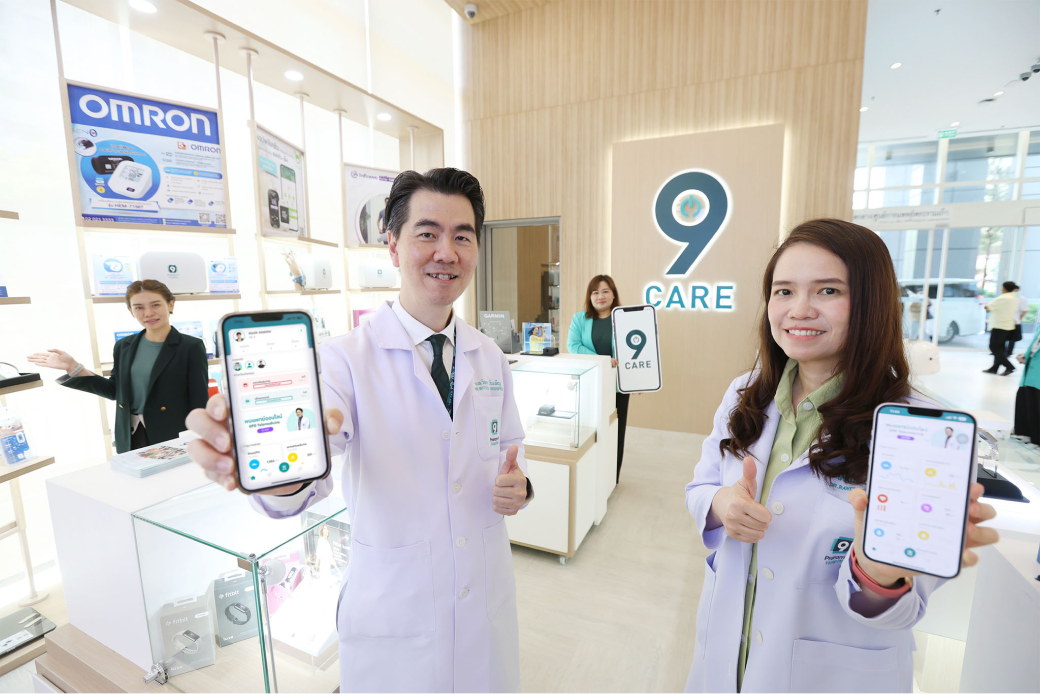
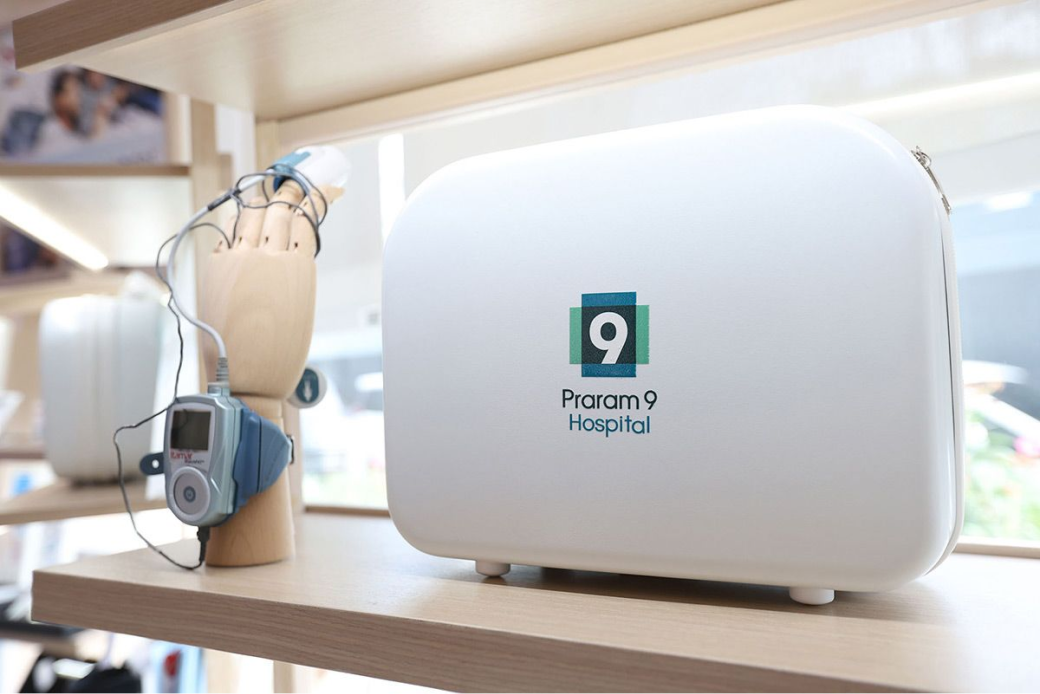
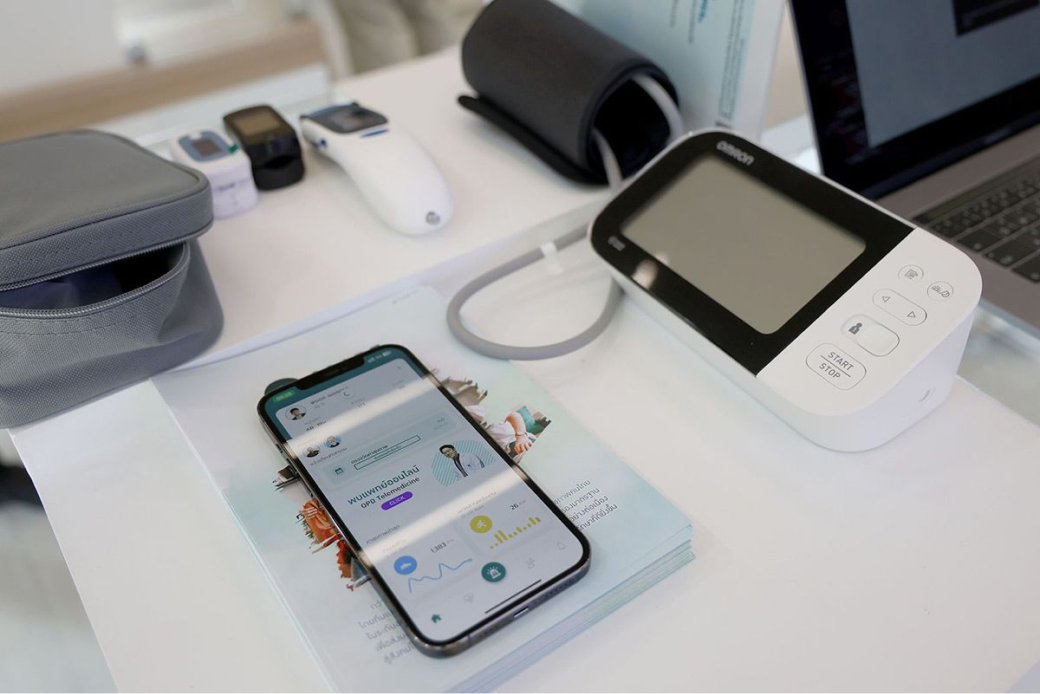
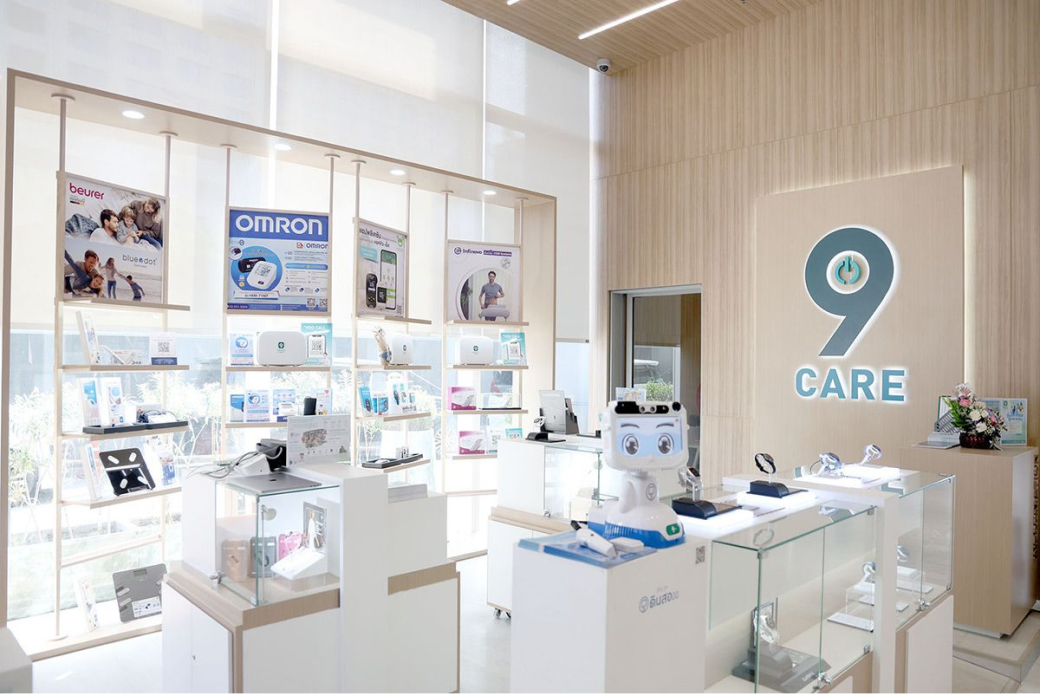
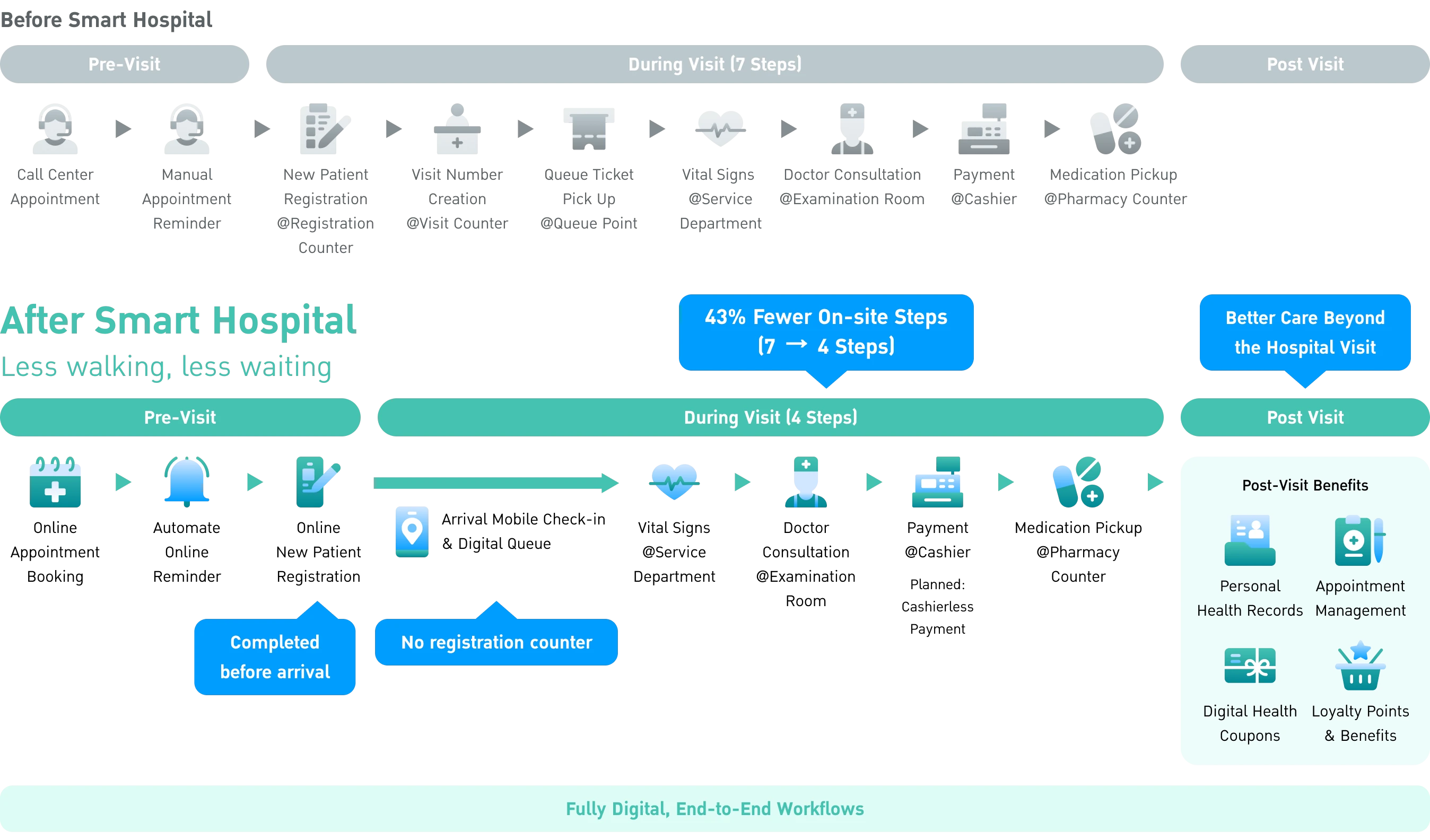
The 9SMART Platform, developed on the LINE Official Account (@Praram9hospital), has been designed to seamlessly connect every stage of the care journey—from before arriving at the hospital, during the service experience, and after returning home. The platform is guided by three key principles:

1. Decentralize (Service Decentralization)
Expanding service options that allow customers to complete certain procedures digitally instead of entirely at service counters, thereby reducing waiting times and congestion.

2. Personalized Care
Delivering services and communications tailored to the specific information and needs of each customer.

3. Seamless Integration
Connecting online processes with in-hospital services into a single continuous workflow. Information is automatically transferred across systems, reducing errors and eliminating redundant processes.
Service Process (Patient Journey) under the “9SMART” Platform
Performance in 2025

The outpatient department (OPD) service process was reduced from seven steps to
representing a 43 percent reduction in service procedures.

The registration time for new patients decreased from 15–20 minutes to
representing an approximately 90 percent improvement in processing speed.

The Show-up Rate increased from 83 percent to
reflecting improved appointment adherence.

of users reported satisfaction with the system. The most frequently used functions include doctor appointment booking, access to medical test results, and Mobile Check-in via mobile devices.

Users aged 51 years and above accounted for
of total users, reflecting the system’s user-friendly design and accessibility for older adults.

The digital transformation of the OPD process and the elimination of paper-based documentation reduced paper consumption by more than
over a three-year period, contributing to a reduction in greenhouse gas emissions.

improved workforce efficiency, enabling personnel to focus more on providing care and services to customers.
Stakeholders Directly Impacted

Employees

Customers

Shareholders and Investors

Suppliers
Communities and Society