


Climate Change Adaptation


Goals and Performance Highlights
Goals


*Update of Net Zero Emissions Target
The Net Zero Emissions target of 2065 disclosed in the Company’s 2025 Form 56-1 One Report reflected the Company’s target applicable to the reporting period covered by the report. Following the publication of the report, on 12 May 2026, the Board of Directors approved the revision of the Company’s Net Zero Emissions target from 2065 to 2050. The revised target supports Thailand’s current climate transition direction and reflects the Company’s strengthened commitment to transitioning towards a low-carbon hospital.
Following this approval, the Company will progressively review and update its greenhouse gas reduction plan, interim targets, emissions coverage, renewable energy initiatives, related climate metrics and website disclosures to support implementation of the revised target. Further details will be disclosed as they are formally approved, and the revised target will be reflected in the Company’s 2026 Form 56-1 One Report.
Performance in 2025



Challenges and Opportunities
Amid these challenges, the Company recognizes opportunities to elevate healthcare standards through the development of a “Smart and Green Hospital”, aiming to become a healthcare institution that promotes both quality of life and environmental sustainability.

Healthcare Innovation

Resource Efficiency

Supply Chain Collaboration
The Company has designated responsible parties to manage both the impacts of climate change and environmental factors on the Company’s operations (Outside-in) such as risks related to energy, infrastructure, service continuity, and carbon-related regulatory costs and the impacts of the Company’s operations on climate change and the environment (Inside-out). This includes systematic management of greenhouse gas emissions across scope 1, scope 2, and scope 3 throughout the value chain.
The Company believes that public health begins with a sustainable ecosystem and environment. Therefore, the concept of “Low Carbon Healthcare” has been integrated into the organization’s DNA. Climate change management is not viewed merely as an ESG responsibility, but rather as a strategic mission directly linked to societal sustainability, health security, and the quality of life of both present and future generations.
The Company is committed to becoming a hospital that grows alongside climate responsibility and contributes to advancing Thailand’s healthcare system toward a low-carbon future. To achieve this, the Company has adopted the frameworks of the Task Force on Climate-related Financial Disclosures (TCFD) and IFRS S2 Climate-related Disclosures in conducting scenario analysis, risk and opportunity assessment, strategy development, and transparent climate-related disclosures. These efforts link environmental impacts with financial dimensions in a tangible manner and support climate governance in line with international standards.
Climate-Related Risk and Opportunity Management
The Company has integrated climate-related risks into its Enterprise Risk Management (ERM) process through the following steps:

Risk Identification

Risk Assessment

Risk Prioritization

Risk Mitigation

Monitoring and Reporting
Management Approach and Value Creation
The Company discloses climate-related information in reference to the recommendations of the Task Force on Climate-related Financial Disclosures (TCFD) across four pillars: Governance, Strategy, Risk Management, and Metrics & Targets. The Company is also preparing to align its disclosures with IFRS S2 Climate-related Disclosures issued by the International Sustainability Standards Board (ISSB), in accordance with the implementation timeline to be mandated by the Securities and Exchange Commission of Thailand (SEC Thailand) in the future.
Climate and Environmental Governance Structure
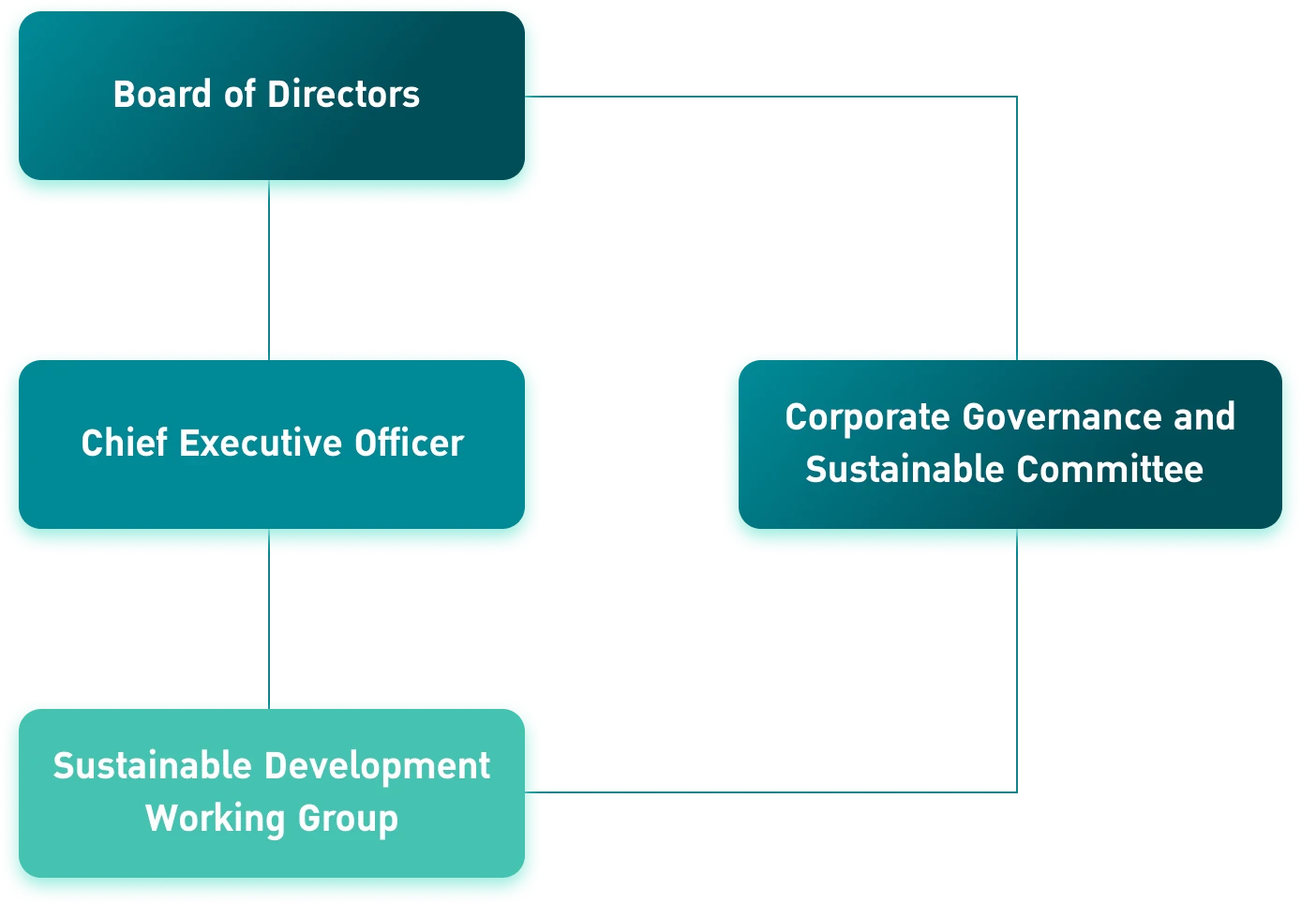
Roles and Responsibilities
- The Board of Directors is responsible for determining the Company’s direction and policies on climate change, approving the Climate Change Policy, Net Zero strategy, and greenhouse gas reduction targets, as well as reviewing material climate-related risks and opportunities that may impact on business operations at least once a year.
- The Corporate Governance and Sustainable Committee, chaired by Mr. Piset Chiyasak, serves as the highest governing body responsible for climate change oversight at the Board level. The Committee is responsible for reviewing and assessing climate change policies, strategies, and performance before proposing them to the Board of Directors for consideration.
- At the management level, Dr. Satian Pooprasert, Chief Executive Officer (CEO), holds the highest responsibility for driving climate-related plans and policies. Miss Kamaporn Tumpipit, Deputy Managing Director of Accounting and Finance (CFO), as Chairperson of the Sustainable Business Development Working Group. The Working Group is responsible for monitoring and reporting the progress and performance of sustainability initiatives, including climate change risk management, to the Corporate Governance and Sustainable Development Committee and the Board of Directors at least annually. This governance structure supports the Board of Directors in effectively overseeing the Company’s strategic direction, sustainability performance, and climate-related targets.
- Sustainable Development Working Group Implement operations in alignment with the organization's sustainability policies and strategic plans. Collect and consolidate relevant data and performance indicators, prepare performance reports for management, and contribute to the relevant sections of the One Report for public disclosure. Promote ESG knowledge and awareness among employees and stakeholders within the organization.
Reporting Frequency
- Reported to the Board of Directors annually.
- Reported to the Corporate Governance and Sustainable Development Committee twice a year.
- Reported to the Chief Executive Officer (CEO) through the Enterprise Risk Management Committee on a quarterly basis.
- Publicly disclosed through the Annual Report / Form 56-1 One Report.
- Reported through the Sustainability Website, with activity updates provided whenever there are significant changes.
The Company has incorporated progress in greenhouse gas reduction into its key performance indicators (Climate-related KPIs), which are linked to the performance evaluation system and variable compensation of senior executives. Accordingly, the Company has established greenhouse gas (GHG) emissions reduction targets covering Scope 1 and Scope 2 emissions, as well as progress against the Company’s transition plan toward the Net Zero Emissions by 2050, as part of its corporate Key Performance Indicators (KPIs). Performance against these climate-related KPIs will be taken into consideration in determining the variable remuneration of the Chief Executive Officer (CEO), the Deputy Managing Director of Accounting and Finance (CFO), acting as the executive responsible for sustainability matters, as well as other relevant senior executives. Such remuneration considerations are implemented in accordance with the Company’s remuneration policy framework and the consideration of the Board of Directors, with the relevant KPIs being determined and periodically reviewed by the Nomination and Remuneration Committee (NRC). This framework is intended to strengthen executive accountability in driving the Company’s sustainability and climate-related objectives.
Climate Strategy
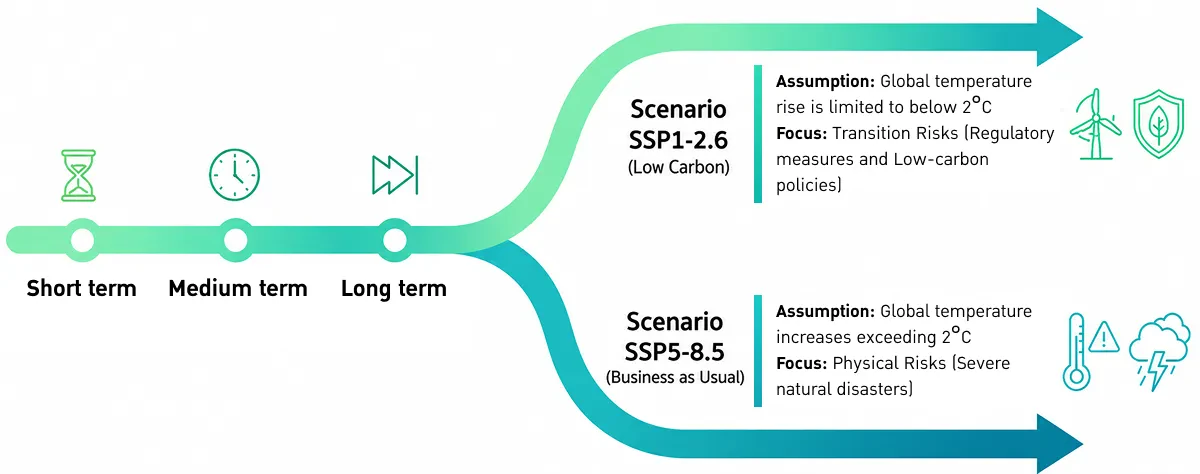
The Company has conducted an assessment of climate-related risks and opportunities in accordance with the frameworks of the Task Force on Climate-related Financial Disclosures (TCFD) and IFRS S2 Climate-related Disclosures, with reference to the IPCC Shared Socioeconomic Pathways (SSPs). The assessment considers potential impacts on the Company’s business operations and financial position, covering all medical services and supporting operational activities. The assessment timeframe is defined across three time horizons: short-term, medium-term, and long-term.
Climate Scenario Analysis
The Company conducted a climate scenario analysis covering both physical risks and transition risks under two key scenarios, with reference to the frameworks of the Task Force on Climate-related Financial Disclosures (TCFD) and IFRS S2 Climate-related Disclosures.
This analysis aims to assess the potential impacts of climate-related risks and opportunities on the Company’s business operations, strategy, and financial planning, as outlined below.
1. SSP1-2.6 Scenario (Low-Carbon Scenario)
This scenario assumes that global temperature rise is limited to below 2°C, in line with international climate commitments. It primarily focuses on transition risks, particularly those arising from low-carbon policies and regulatory measures.
| Key Characteristics | Business Impacts | Company Response |
|---|---|---|
|
|
|
2. SSP5-8.5 Scenario (Business as Usual – BAU)
A scenario in which greenhouse gas emissions remain at high levels, resulting in global temperature increases exceeding 2°C, with greater exposure to severe physical climate risks.
| Key Characteristics | Business Impacts | Company Response |
|---|---|---|
|
|
|
Corporate Strategy
The Company has established four strategic pillars to strengthen the organization’s long-term resilience in addressing climate-related risks and opportunities under the climate scenarios described above. The details are as follows:
Decarbonization Strategy
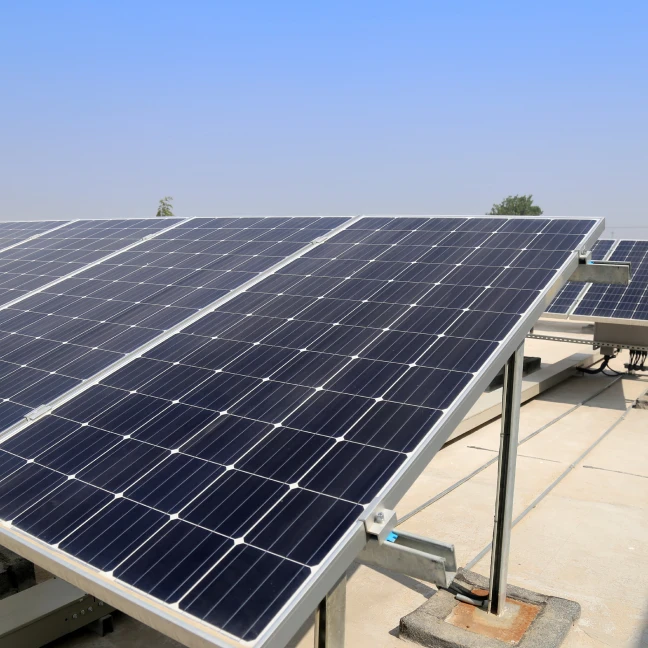
- Continuously expand the installation of solar rooftop power generation systems.
- Replace medical equipment and devices with high energy-efficiency alternatives.
- Establish an internal carbon price at Baht 450 per tCO₂e to support decision-making in evaluating new investment projects.
- Promote the development of a low-carbon supply chain, starting with key suppliers.

Adaptation and Resilience Strategy
- Develop infrastructure capable of withstanding climate risks, such as flood protection systems.
- Install high-reliability backup power generators to support emergency situations.
- Develop and regularly test the Business Continuity Plan (BCP) through annual scenario-based drills.
- Consider obtaining insurance coverage for climate-related risks.

Sustainable Healthcare and Innovation Strategy
- Develop Telemedicine services and at-home care services to reduce travel.
- Apply digital technologies and artificial intelligence (AI) to improve resource efficiency.
- Promote digital health systems and electronic documentation to reduce paper usage.
- Design healing environments using environmentally friendly materials.

Engagement and Governance Strategy
- Implement a Green Procurement Policy.
- Drive employee engagement initiatives such as PR9 GO Green and Care the Bear programs.
- Disclose climate-related information in accordance with international reporting frameworks such as TCFD and GRI.
- Establish environmental KPIs and link them to executive remuneration.
The strategies outlined above not only address transition risks in line with the TCFD framework, but also create opportunities to enhance operational efficiency and strengthen confidence among patients and investors that the Company is a leading healthcare provider committed to growing alongside sustainable environmental stewardship.
Climate-Related Risk and Opportunity Management
Assessment of Climate-Related Risks and Opportunities in accordance with TCFD and IFRS S2
The Company conducted a climate scenario analysis under the following assumptions: SSP1-2.6 (Low Emission Scenario), which assumes that the world is able to limit the global temperature increase to below 2°C in line with international commitments, with a primary focus on transition risks related to low-carbon regulations and policies; and SSP5-8.5 (High Emission Scenario), which assumes a high level of greenhouse gas emissions resulting in a global temperature increase exceeding 2°C, with an emphasis on severe physical risks. The results of the climate risk assessment are summarized as follows:
| Risk Category | Risk Issue | Details and Factors Affecting the Business | Financial Impact | Management Strategy |
|---|---|---|---|---|
| Physical Risk | Acute Risk (High Risk) |
|
|
Mitigation Strategy
|
| Chronic Risk (High Risk) |
|
|
||
| Transition Risk | Policy and Legal - Carbon tax and energy regulation (High Risk) | Stricter environmental regulations, such as carbon taxes and energy efficiency requirements for controlled buildings. |
|
|
| Market and Consumer Behavior (Low Risk) | Customers increasingly prioritize hospitals with environmentally responsible policies (Green Hospitals) and prefer environmentally friendly healthcare services. | Loss of market opportunities – Risk of losing customers if the organization’s sustainability image is not clearly communicated. | ||
| Economy and Energy (High Risk) | Volatility in clean energy prices and fuel prices in the global market. | Cost volatility – Rising electricity prices and higher transportation costs for medical supplies. | ||
| Technology (High Risk) | Need for investment in new medical innovations and AI to improve energy efficiency. | Access to financing – Lending conditions from financial institutions that emphasize ESG criteria (Green Loans). |
Assessment of Climate-Related Opportunities in accordance with TCFD and IFRS S2
| Opportunity Category | Description | Details and Approaches to Seize Opportunities | Financial Impact |
|---|---|---|---|
| Development of service innovations aligned with evolving customer trends while reducing greenhouse gas emissions. (High Opportunity) | Adoption of modern medical technologies and service models that reduce resource consumption and travel, addressing the expectations of health- and environmentally conscious consumers. |
|
|
| Access to Sustainable Finance (Medium Opportunity) | Improved access to green finance, including loans, debt instruments, and bond issuances from banks and capital markets, helping reduce the Company’s financing costs. | Advancing toward becoming an AI-driven hospital by fully leveraging artificial intelligence technologies, while emphasizing sustainability and strengthening preparedness to address climate change. |
|
Performance in responding to Reduction Net Greenhouse Gas Emissions
Net Greenhouse Gas Emissions for the Years 2022-2025
-
SCOPE I and II -0.4%
-
SCOPE III +12.6%
-
Total +5.3%
-
SCOPE I and II +7.3%
-
SCOPE III +16.2%
-
Total +11.3%
Greenhouse Gas Emission Rate per Adjusted Patient Day
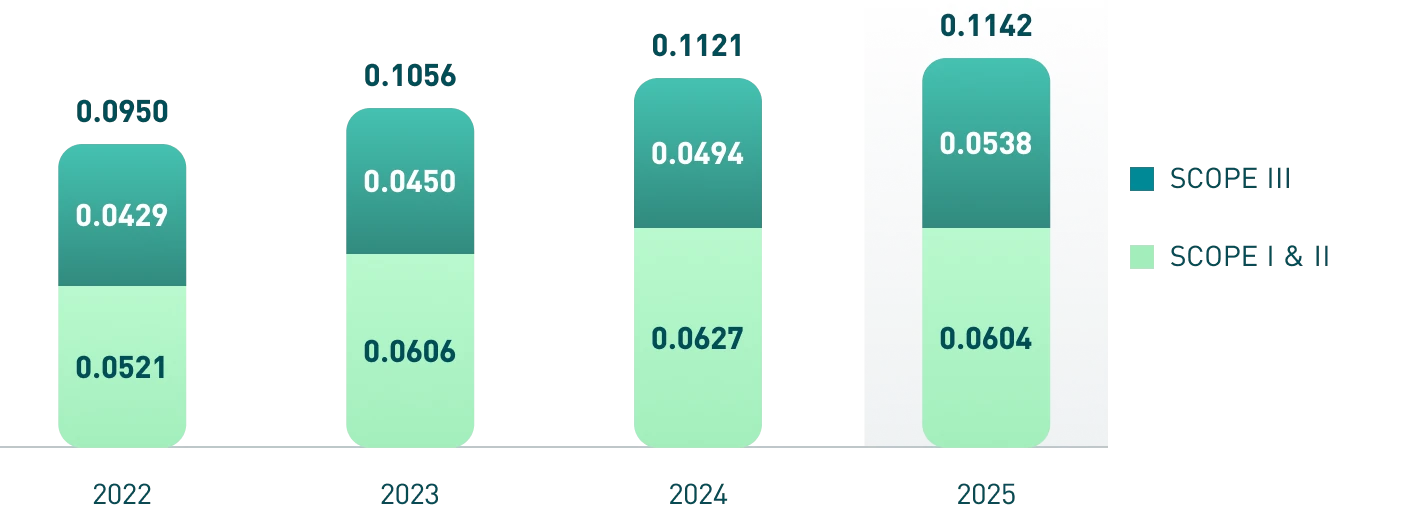
-
SCOPE I and II -3.7%
-
SCOPE III +8.9%
-
Total +1.9%
-
SCOPE I and II +15.8%
-
SCOPE III +25.4%
-
Total +20.2%
Greenhouse Gas Emission Rate per Total Revenue
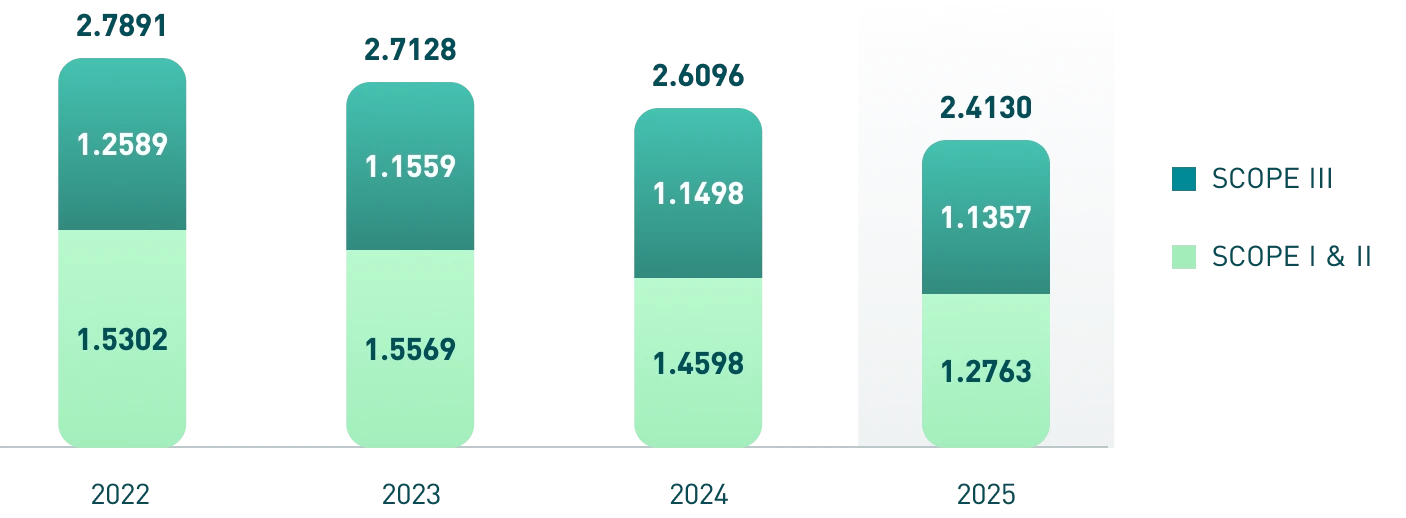
-
SCOPE I and II -12.6%
-
SCOPE III -1.1%
-
Total -7.5%
-
SCOPE I and II -16.6%
-
SCOPE III -9.7%
-
Total -13.5%
Carbon Footprint for Organization (CFO) Verification and Assurance
Praram 9 Hospital Public Company Limited’s organizational greenhouse gas (GHG) emissions for the reporting period from 1 January to 31 December 2025 were independently verified by NPC Safety and Environmental Service Co., Ltd., a third-party verification body registered with the Thailand Greenhouse Gas Management Organization (Public Organization: TGO), under Thailand’s Carbon Footprint for Organization (CFO) Programme.
The Company’s GHG inventory was prepared in accordance with TGO’s Requirements for Calculation and Reporting of the Carbon Footprint of Organization. The independent verification was conducted in accordance with TGO’s CFO verification requirements and the TGO Guidance of the Carbon Footprint for Organization, which incorporate internationally recognized principles for organizational GHG accounting and verification.
The verification conclusion was issued at a Limited Level of Assurance, with a materiality threshold of 5%. Following the independent verification, TGO certified the Company’s organizational GHG emissions under CFO Certificate No. TGO CFO FY26-04-402, registered on 18 March 2026.
The certificate covers the verification period from 1 January to 31 December 2025 and confirms that the Company’s reported GHG emissions were verified by NPC Safety and Environmental Service Co., Ltd. in accordance with the applicable TGO CFO requirements.
The 2025 certification represents the Company’s fourth consecutive year of organizational GHG verification and TGO CFO certification, covering the 2022–2025 reporting periods.
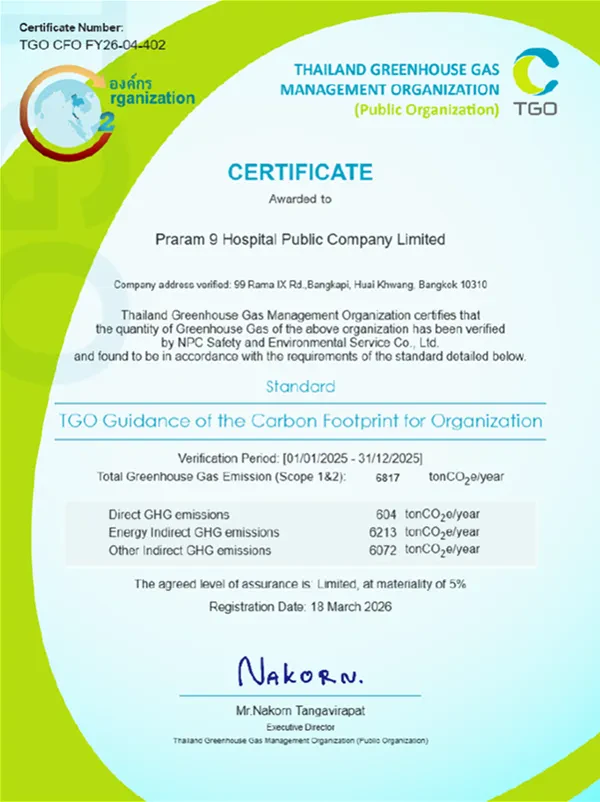

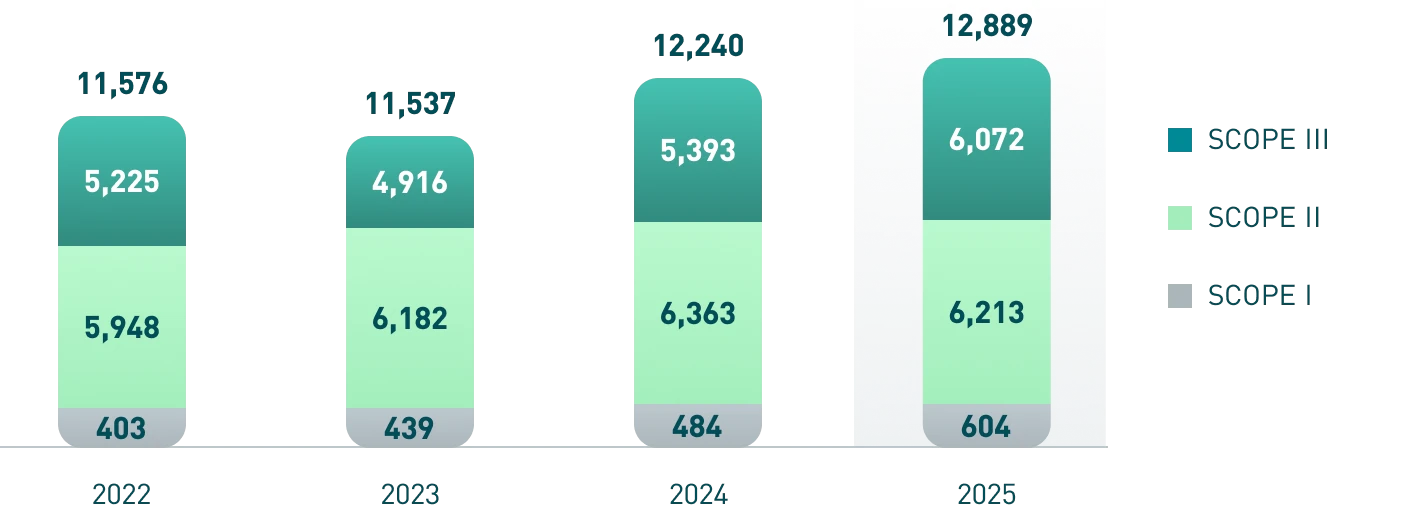
In the performance results for the year 2025 compared to the base year 2022
- The Company’s net greenhouse gas emissions increased by 11.3%.
- Greenhouse gas emissions per adjusted patient day increased by 20.2%.
- Greenhouse gas emissions per total revenue decreased by 13.5%.
- When categorizing greenhouse gas emissions for the year 2025
- Scope I emissions amounted to 604 tCO2e
- Scope II emissions amounted to 6,213 tCO2e
- Scope III emissions amounted to 6,072 tCO2e
The Company’s total greenhouse gas emissions increased by 11.3% compared to the 2022 baseline year, primarily due to business expansion and the development of new operational facilities. At the same time, carbon intensity per revenue decreased by 13.5%, reflecting the organization’s ability to improve energy efficiency and increase the share of clean energy while expanding its business activities.
SCOPE III by Category
| Category | GHG (tCO2e) | Remark | ||||
|---|---|---|---|---|---|---|
| 2022 | 2023 | 2024 | 2025 | |||
| 1. | Purchased goods and services | 1,035.42 | 1,030.91 | 1,036.05 | 1,090.76 | |
| 2. | Capital goods | 95.32 | 81.89 | 96.07 | 778.63 | The amount spent on purchasing medical equipment increased, and the EF value was updated to the latest version. |
| 3. | Fuel- and energy-related activities | 1,197.33 | 1,243.89 | 1,284.00 | 1,090.66 | |
| 4. | Upstream transportation and distribution | 66.35 | 37.42 | 129.8 | 177.84 | |
| 5. | Waste generated in operations | 717.43 | 272.79 | 643.58 | 623.33 | |
| 6. | Business travel | 2.87 | 8.79 | 8.75 | 15.87 | |
| 7. | Employee commuting | 2,881.23 | 1,203.89 | 1,817.98 | 656.73 | The commuting survey respondents showed different travel patterns compared to the previous year, with higher proportions of walking and motorcycle use, while private car usage decreased. |
| 8. | Upstream leased assets | 38.45 | 22.36 | 10.62 | 9.69 | |
| 9. | Downstream transportation and distribution | 2,261.94 | 2,325.94 | 2,417.73 | 2,699.92 | |
| 10. | Processing of sold products | Not Applicable | Not Applicable | Not Applicable | Not Applicable | |
| 11. | Use of sold products | 0.14 | 0.05 | 0.13 | 0.18 | |
| 12. | End-of-life treatment of sold products | 12.13 | 42.23 | 10.87 | 10.62 | |
| 13. | Downstream leased assets | 916.42 | 786.50 | 801.47 | 795.91 | |
| 14. | Franchises | Not Applicable | Not Applicable | Not Applicable | Not Applicable | |
| 15. | Investments | 0.03 | 0.03 | 0.03 | 0.03 | |
The Company conducted the assessment in accordance with the guidelines of the Thailand Greenhouse Gas Management Organization (TGO). The data was verified by LRQA (Thailand) Limited for the years 2022–2024, and by NPC Safety and Environmental Service Co., Ltd. for the year 2025.
| Gas Consumption (Unit : KG) | 2022 | 2023 | 2024 | 2025 |
|---|---|---|---|---|
| Nitrous Oxides (Nox) | 250 | 300 | 275 | 825 |
| Sulphur Oxide (Sox) | 0 | 0 | 0 | 0 |
| Volatile Organic Compounds (VOCs) | 0 | 0 | 0 | 0 |
Verification Standard and Scope
The organizational greenhouse gas (GHG) emissions data of Praram 9 Hospital Public Company Limited for the reporting period from 1 January to 31 December 2025 were independently verified by NPC Safety and Environmental Service Co., Ltd.
The verification was conducted in accordance with ISO 14064-3:2019, which specifies requirements and provides guidance for the verification and validation of greenhouse gas statements, together with the guidance for verification of the Carbon Footprint for Organization issued by the Thailand Greenhouse Gas Management Organization (Public Organization), or TGO.
The verification covered Scope 1, Scope 2, and the reported and verified Scope 3 categories: Categories 1, 3, 5, 9, and 12. It was performed at a limited level of assurance, with a materiality threshold of 5%.
As part of the verification process, the verifier reviewed and sampled fuel and electricity consumption data used to calculate GHG emissions, together with supporting payment records and invoices. These procedures formed part of the verification of the GHG inventory within the defined scope.
The GHG inventory was prepared in accordance with TGO’s requirements for the calculation and reporting of the Carbon Footprint for Organization. The verification documentation identifies emission factor references from IPCC publications for 2006, 2013, and 2019; TGO’s emission factors for organizational carbon footprint assessments, issued in April 2022; and TGO’s emission factors for product carbon footprint assessments, issued in July 2022. It also identifies conversion factors from DEDE (2010), as applicable to the calculations.
The assurance applies only to the GHG emissions data within the defined verification scope and does not extend to all information in the Company’s sustainability report.
Approach to Greenhouse Gas Emission Development and Management
The outcomes of the 28th session of the Conference of the Parties under the United Nations Framework Convention on Climate Change (UNFCCC), or COP28, have increased pressure and accelerated efforts to encourage the business sector to expedite transitions toward achieving greenhouse gas reduction targets under the Paris Agreement, which aims to limit the global temperature increase this century to below 2 degrees Celsius compared to pre-industrial levels and to strive to keep the increase within 1.5 degrees Celsius.
Net Zero Pathway
The Company has established operational targets covering the short-term, medium-term, and long-term through the implementation of climate change strategies aligned with internationally recognized frameworks and standards, including TCFD, SBTi, IFRS S1, and IFRS S2. These frameworks are applied to strengthen governance, strategic planning, and the development of climate-related action plans, demonstrating the Company’s ability to respond promptly to climate-related impacts while supporting long-term sustainability.
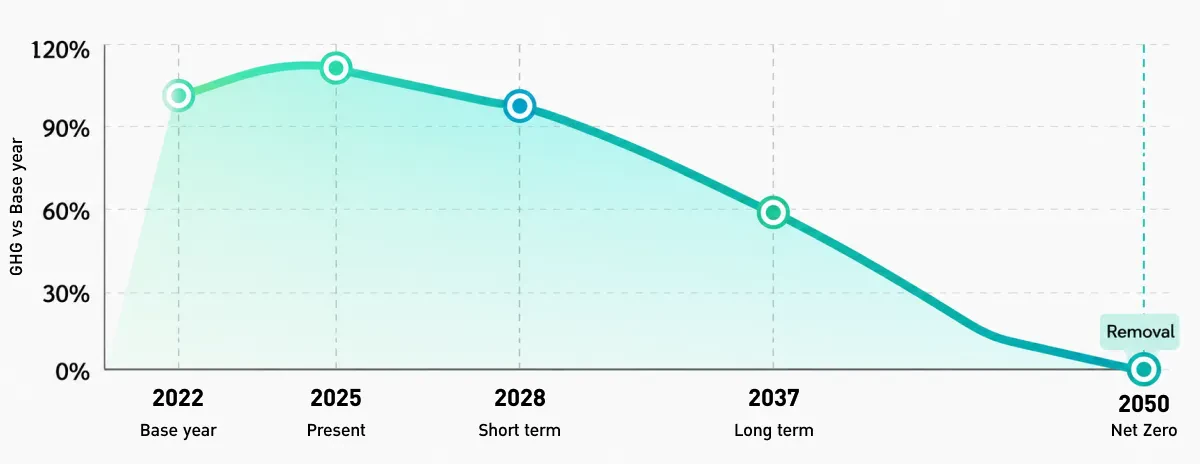 Click to Enlarge


Target: Reduce net greenhouse gas emissions (Scope 1, 2, and 3) by 5% compared with the 2022 base year.
- Install Solar Rooftop systems for Buildings B and C (currently under implementation).
- Upgrade the cooling system in Building B from a Split Type system to a Chiller Water System to improve energy efficiency.
- Install a VRV system to replace the Split Type system in Building A in order to reduce energy consumption.
- Install a Solar Cell system for the wastewater treatment system.
- Study approaches for participation in the Thailand Voluntary Emission Reduction Program (T-VER).
- Submit a commitment letter to participate in the Science Based Targets initiative (SBTi Commitment).
Target: Reduce net greenhouse gas emissions (Scope 1, 2, and 3) by 40% compared with the 2022 base year.
- Increase the proportion of renewable energy usage through Solar Energy and Renewable Energy Certificates (REC) / Power Purchase Agreements (PPA).
- Transition to low-GWP (Global Warming Potential) refrigerants across the organization.
- Implement a Green Procurement Policy to reduce greenhouse gas emissions in Scope 3, along with the implementation of Supplier Decarbonization initiatives.
- Fully implement a Building Management System (BMS) to enhance energy management efficiency.
- Obtain validation for the Company’s SBTi Near-term Target.
- Develop a comprehensive Decarbonization Roadmap.
Target: Reduce net greenhouse gas emissions (Scope 1, 2, and 3) by 90% compared with the 2022 base year.
- Achieve 100% renewable energy usage across all buildings to replace fossil fuel-based energy consumption.
- Obtain green building certifications such as LEED or TREES.
- Offset residual carbon emissions through carbon removal projects, such as reforestation projects under the T-VER standard.
- Obtain SBTi Long-term Net Zero validation.
- Strive to achieve Net Zero Verification before 2050.
Internal Carbon Pricing and Carbon Credit Management
The Company has begun studying the implementation of Internal Carbon Pricing, set at Baht 450 per ton of carbon dioxide equivalent (tCO₂e), as a tool to evaluate the economic feasibility of energy investments and greenhouse gas emissions reduction projects, as well as to support risk analysis under the TCFD framework. The reference price is based on the average trading price in Thailand’s voluntary carbon credit market (T-VER) in 2024, which has increased in response to growing private sector demand for achieving carbon neutrality targets. In 2024, the price range was Baht 400–600 per tCO₂e. This mechanism will serve as one of the approaches for assessing the viability of investments in green technologies and preparing for potential future carbon tax policies.
The Company is also studying the procurement of carbon credits to offset greenhouse gas emissions that cannot currently be reduced through existing technologies, as part of the Company’s risk management plan and sustainability policy. The information obtained from this study will support strategic decision-making regarding carbon credit management, including the procurement, trading, and development of various initiatives aimed at reducing long-term environmental impacts.
Stakeholders Directly Impacted

Employees

Shareholders and Investors

Customers

Suppliers

Communities and Society