

Supply Chain Management


Goals and Performance Highlights
Goals


Performance in 2025



Challenges and Opportunities
Supply Chain Management is a critical driver of treatment quality and service efficiency.
The Company is committed to transparent, ethical, and responsible management practices, covering the procurement of pharmaceuticals, medical supplies, and medical equipment, as well as supporting services throughout the entire product lifecycle. This approach ensures that all items used in patient care meet the highest quality standards and are sourced responsibly and sustainably.
Management Approach and Value Creation
Sustainable Supply Chain Management Strategy
To uphold its commitment to strong Good Corporate Governance and align with international sustainability standards, the Company has established five key strategies for Supply Chain Management as follows:

Commitment and Ethical Standards
The Company demonstrates its commitment to Supply Chain Management in accordance with Good Corporate Governance by requiring all key suppliers to acknowledge and sign the Supplier Code of Conduct, which covers human rights, labor practices, environmental responsibility, and anti-corruption. In addition, the Company encourages suppliers to become members of the Thai Private Sector Collective Action Against Corruption (CAC) to promote shared ethical standards. In 2025, 100% of Critical Tier 1 suppliers acknowledged and signed the Supplier Code of Conduct. In addition, the Company has established a Sustainable Procurement Policy, which requires supplier selection to take ESG (Environmental, Social, and Governance) factors into consideration alongside quality and price. The key considerations include:
- Environmental: energy efficiency, waste and pollution management, water stewardship, and greenhouse gas emission reduction.
- Social: human rights, labor practices, fair employment, and the health and safety of workers and communities.
- Governance: anti-corruption, prevention of conflicts of interest, and protection of personal medical data.
The Supplier Code of Conduct is communicated not only through publication on the Company’s website for suppliers and the public, but also through training programs for all employees responsible for procurement.

Supplier Evaluation and Development
The Company conducts annual supplier evaluations covering quality, service performance, and operational effectiveness in alignment with ESG principles. A Self-Assessment Checklist is used to ensure that suppliers possess the capabilities and standards consistent with the Company’s requirements and sustainability policies.
- Self-Assessment: In 2025, 100% of the Company’s Critical Suppliers completed the annual sustainability self-assessment and achieved a 100% pass rate. No suppliers were found to be non- compliant with the Company’s Supplier Code of Conduct. All evaluation results were rated at Level A across both the pharmaceutical and medical supplies category and the general supplies category.
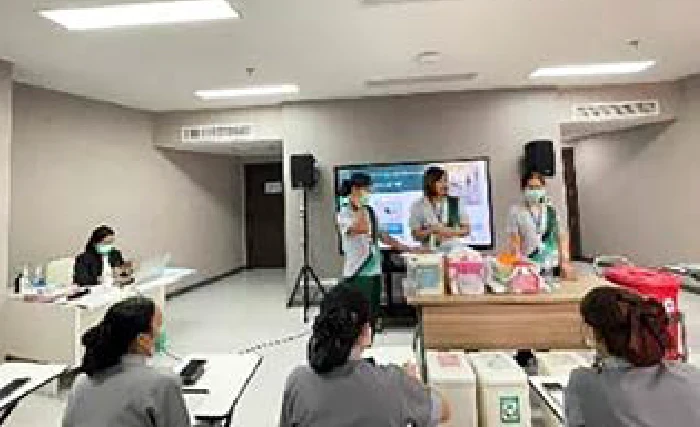
- Capability Development: The Company continuously provides training programs to enhance the capabilities of suppliers and outsourced personnel. In 2025, training sessions covered Emergency Code and safety management, Facility Management and Safety (FMS), Infection Control practices, chemical and mercury management, proper handling and storage of bodily fluids, appropriate use of cleaning agents, and fall prevention. In 2025, 88% of the Company’s housekeeping staff and 90% of outsourced housekeeping personnel participated in these training programs.
Addition to training for supplier and contractor employees, the Company also emphasizes strengthening supplier and contractor capabilities in the social and environmental dimensions. This includes promoting knowledge and awareness of human rights, fair labor practices, employee health and safety, and environmental management. These initiatives enable suppliers to enhance their operations in alignment with international sustainability standards and help mitigate potential risks within the supply chain.

Joint Product Quality Assurance
The Company plans and works closely with suppliers to ensure the quality of pharmaceuticals and medical supplies throughout the supply chain, from manufacturing sources to points of service, to ensure maximum patient safety. In 2025, no product quality incidents attributable to suppliers were identified.
Systematic ESG Risk Assessment and Due Diligence
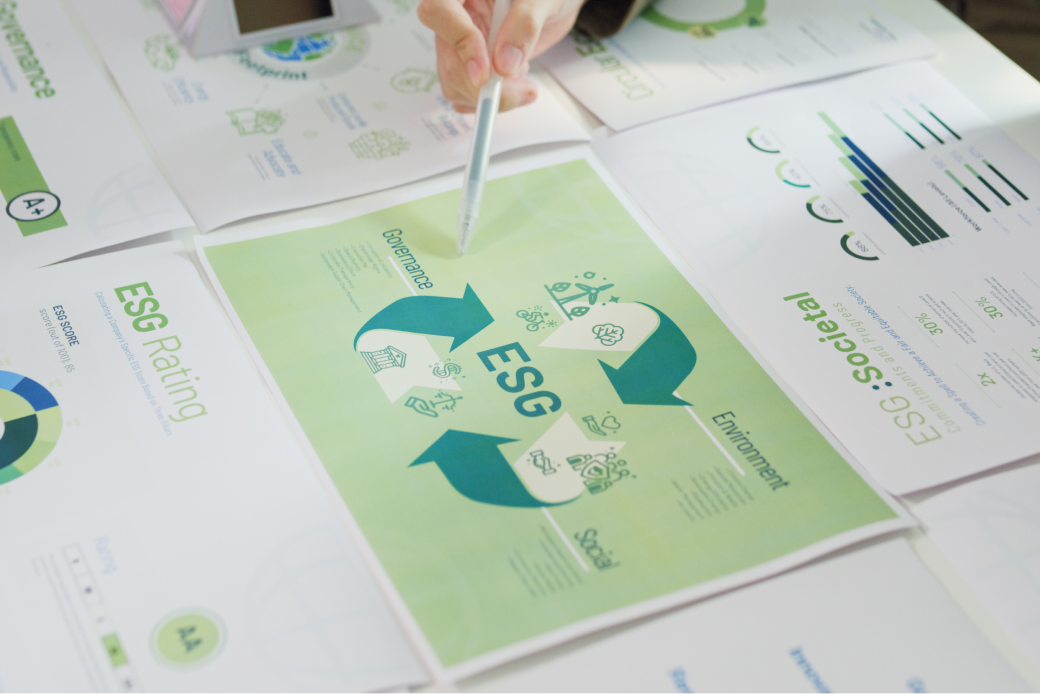
The Company places strong emphasis on comprehensive ESG risk assessments across all supplier tiers to ensure that every level of the supply chain aligns with the Company’s sustainability policies and standards.

New Supplier Due Diligence
Due diligence is conducted for all new suppliers prior to entering the selection process. This includes screening their track record in labor law compliance (including human rights and labor practices), business ethics, and environmental performance in accordance with ESG principles at the upstream level before onboarding into the supply chain. This process helps prevent and mitigate potential adverse social and environmental impacts. In 2025, 100% of new suppliers successfully passed ESG due diligence prior to registration.

Evaluation of Existing Suppliers
The Company establishes criteria to identify key suppliers that present high risks or have a significant impact on the Company’s operations. Supplier classification is based on procurement value, the criticality of goods and services, and quality, environmental, and social risk factors. Suppliers are categorized into two groups as follows:
- Critical Tier 1: Key suppliers that conduct business directly with the Company and represent the highest procurement value or hold strategic importance, with a direct impact on the quality and safety of core services (e.g., pharmaceuticals and medical supplies). A total of 30 suppliers were classified in this group (15 general procurement suppliers/ 15 pharmaceutical and medical suppliers), accounting for 53.79% and 40.83% of total procurement value, respectively. 100% of these suppliers underwent risk assessment.
- Critical Non-Tier 1: Key suppliers that do not conduct business directly with the Company but provide goods or services to Critical Tier 1 suppliers in support of operations. This group comprised 30 suppliers (15 general procurement suppliers/ 15 pharmaceutical and medical suppliers), with 100% undergoing risk assessment. ESG risks are evaluated through a Self-Assessment process and monitored via the Grievance Mechanism, which allows suppliers, communities, or third parties to report concerns through the 1270 hotline, the Company’s website, or email at procurement@praram9.com. These measures help mitigate potential adverse impacts on environmental, social, and governance dimensions.

Follow-up on 2025 Risk Assessment Results
The Company places strong emphasis on selecting and developing capable suppliers, while conducting regular monitoring and evaluations to ensure that all suppliers operate in accordance with established standards. This oversight covers product and service quality, safety, and social and environmental responsibility in particular.
Performance in 2025

Onsite Audit


Transparency and Accountability
The Company discloses procurement information and supply chain management processes in a transparent manner. It also provides a Whistleblowing Channel for all stakeholder groups, including suppliers and communities, enabling them to submit complaints or report concerns through the Company’s designated communication channels.
The Company believes that implementing these five strategic pillars will help mitigate ethical, quality, and operational risks, while fostering sustainability and creating shared value throughout its supply chain in a stable and sustainable manner.
Identification of Critical Suppliers
The Company establishes criteria to identify Critical Suppliers to conduct analysis, develop appropriate strategies, and perform risk assessments to enhance procurement effectiveness, as follows:

1. Critical Tier 1 Suppliers
are identified based on product and service categories that are essential to the Company’s operations:
- General goods and services: 15 suppliers were selected from those with the highest annual procurement volume.
- Pharmaceuticals and medical supplies: 15 suppliers were selected from those with the highest annual procurement volume.
Criteria for Identifying Critical Suppliers
- Suppliers that continuously provide pharmaceuticals, medical supplies, goods, or services to the Company.
- Suppliers with high procurement value or volume.
- Suppliers operating in limited markets whose goods or services are difficult to substitute.
2. Critical Non-Tier 1 Suppliers
are identified from those that provide goods and services to Critical Tier 1 suppliers in support of the Company’s operations.
Supplier Management
The Company places strong emphasis on supplier development to ensure alignment in legal compliance and the advancement of sustainable business practices. Critical Suppliers and all other suppliers are evaluated at least once annually in accordance with supplier development and performance enhancement plans. This approach contributes to risk reduction while creating opportunities for sustainable competitive advantage.
Performance in 2025
| Supplier Screening | Unit | General Procurement | Pharmaceutical and Medical Supplies |
|---|---|---|---|
| Total number of suppliers | Suppliers | 398 | 527 |
| Critical Tier 1 suppliers | Suppliers | 15 | 15 |
| Total procurement value | Million Baht | 921.51 | 673.3 |
| Procurement value of Critical Tier 1 suppliers | Million Baht | 495.71 | 274.8 |
| Percentage of procurement value from Critical Tier 1 suppliers | % | 53.79 | 40.83 |
| Total number of suppliers not directly conducting business with the company | Suppliers | 45 | 45 |
| Critical Non-Tier 1 suppliers (indirect suppliers) | Suppliers | 15 | 15 |
| Acknowledgment and Signing of the Supplier Code of Conduct | Unit | General Procurement | Pharmaceutical and Medical Supplies |
|---|---|---|---|
| Total number of suppliers covered and notified of the Supplier Code of Conduct | Suppliers | 15 | 10 |
| Total number of suppliers signing the Supplier Code of Conduct | Suppliers | 15 | 10 |
| Percentage of suppliers signing the Supplier Code of Conduct | % | 100 | 100 |

Responsibility Toward Suppliers
In addition to maintaining a transparent and fair supplier selection process, the Company places strong emphasis on fair trade credit practices. Clear standard payment terms are established to enhance suppliers’ liquidity and financial stability. A payment verification system is in place to ensure that payments are processed completely, accurately, and on a timely basis.
Grievance Mechanism
Suppliers, employees, or external parties may submit supply chain–related complaints through the Company’s designated channels: procurement@praram9.com, the 1270 hotline, or an online submission form. All complaints are acknowledged within five business days and investigated within a defined timeframe, with results communicated within 30 days. If additional time is required, the complainant will be informed of the reason and the revised timeline.
Corrective Action & Consequence Management
The Company has established clear procedures in cases where a supplier fails to meet ESG risk assessment standards or is found to be non-compliant with the Supplier Code of Conduct. The process is as follows:


Stakeholders Directly Impacted

Suppliers

Employees

Customers

Shareholders and Investors