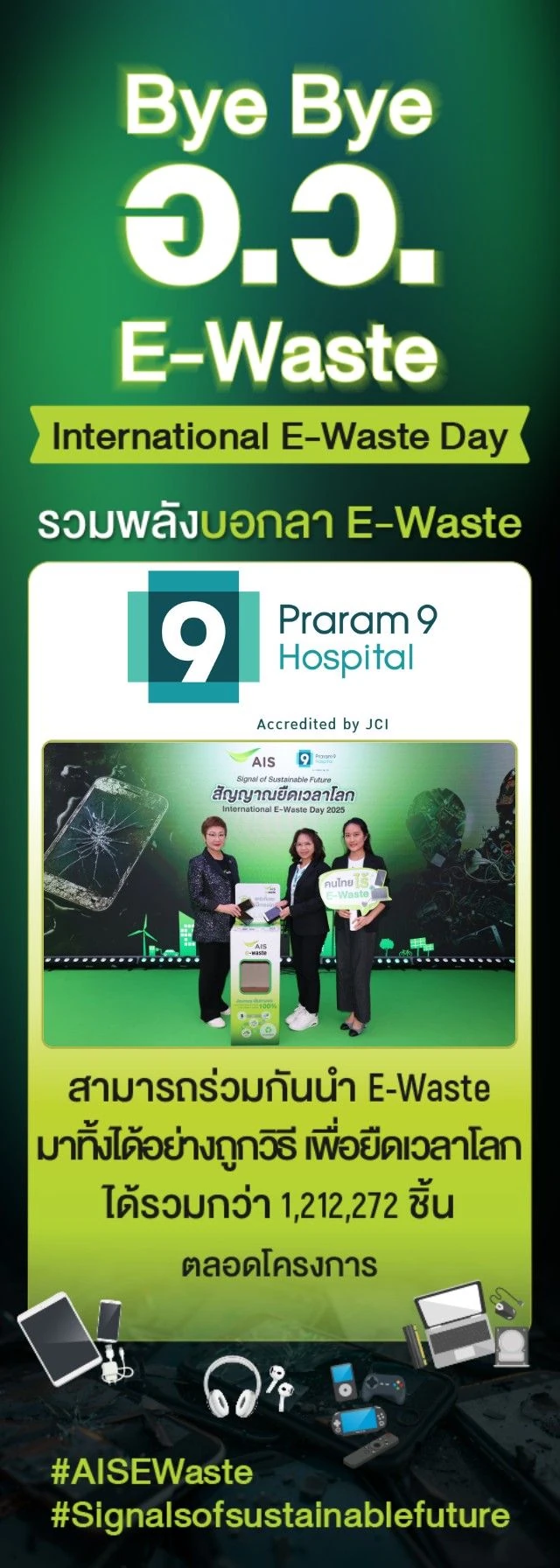

E-Waste Management Project
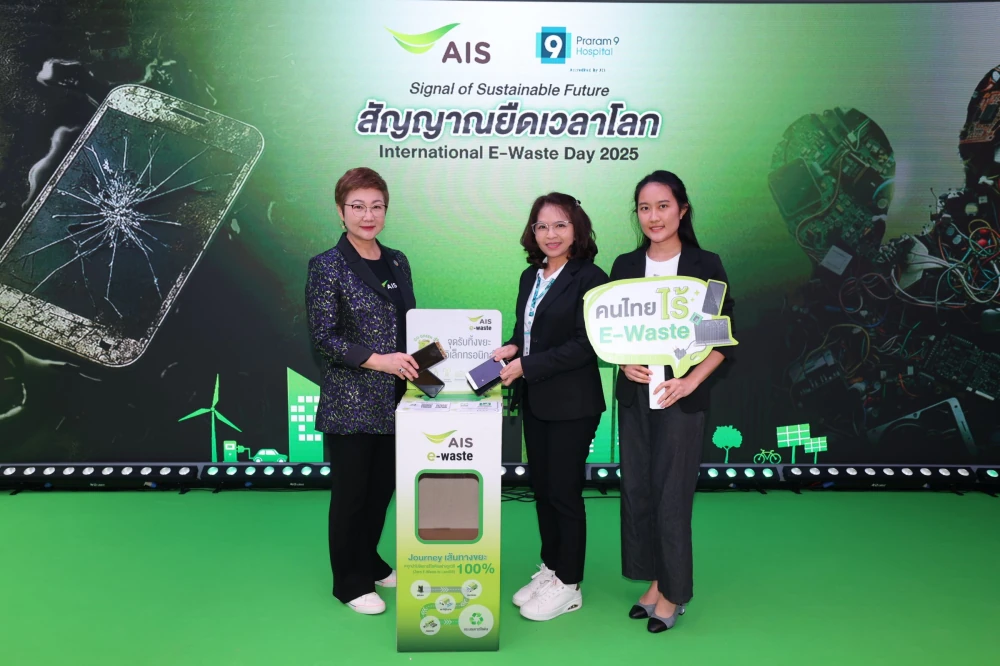
Praram 9 Hospital has continuously operated an electronic waste (E-Waste) collection point since 2024 to the present. The initiative is carried out in collaboration with Advanced Info Service Public Company Limited (AIS) to promote environmental awareness through the “Dispose of E-Waste Properly” campaign. The project invites employees, staff, patients, and visitors to bring electronic waste, such as mobile phones, tablets, accessories, computer components, and other electronic devices, to designated collection points prepared by the hospital. The collected items are then sent to proper management and recycling processes in accordance with relevant standards. This initiative aims to reduce the amount of electronic waste that may cause environmental pollution and to mitigate risks from hazardous substances such as mercury, lead, and other heavy metals, which may contaminate soil and water sources and pose risks to public health. In particular, lead exposure may cause toxicity affecting the nervous system, circulatory system, and kidney function. The implementation of this project not only helps reduce the volume of E-Waste in Thailand but also reflects the Company’s commitment to responsible waste management and long-term environmental sustainability.
Objective
- To reduce the volume of hazardous waste in the form of electronic waste (E-waste) compared with the base year 2024.
- To promote and encourage personnel to properly dispose of E-waste and participate in environmental conservation.
Targets and Performance
In 2024, a total of 569 pieces of E-waste were collected, with a combined weight of 487 kilograms. In 2025, the amount of E-waste decreased to 156 pieces, with a total weight of 77.90 kilograms. Compared with the base year, the results show that:
- The number of items decreased by approximately 72.58%.
- The total weight decreased by approximately 83.99%.
In addition, the collected 156 pieces of E-waste (77.90 kilograms) were also used to support social initiatives by being converted into 77.90 GB of internet data, which was provided to children and youth in remote areas through a program.